























Fort Lauderdale Drug Rehab That Addresses the Root Causes of Addiction
When substance use keeps looping, untreated depression, anxiety, or trauma are often steering the wheel. In South Florida, programs that only chase abstinence miss the reason your nervous system reaches for relief. The right care stabilizes mood, heals trauma, and then helps you change patterns.
Fort Lauderdale drug rehab should mean integrated mental health care from day one, not a track you add later. Evidence-based therapy, safe medical support, and family involvement create space to recover without shame. With the right team, you get a plan built around your story and strengths.
Starting with mental health first reduces cravings, improves sleep, and sustains momentum. This approach helps you feel better faster and stay engaged.

What Separates Compassion Behavioral Health From Traditional Drug Rehabs
Compassion Behavioral Health treats mental health as the engine of change, not an afterthought. Our intimate scale means clinical directors know every patient by name and history. Therapists keep minimal caseloads, so sessions go deeper and plans stay individualized.
We operate a 29-bed medical detox and residential program in Hollywood and a 45-bed PHP, IOP, and OP campus in Fort Lauderdale. Care flows across levels with the same core team guiding you. We are JCAHO accredited and licensed by AHCA and DCF, with NAMI and PsychArmor training for military-competent care. A 21-year Army veteran leads our Veteran Services, and TRICARE East is accepted.
Patients often notice clear differences right away:
- Minimal therapist caseloads and director involvement
- Empowerment-based PHP leveling, not punitive
- GeneSight testing to inform medications when indicated
- Canine Assisted Therapy offered twice weekly residential
- Referrals to NeuroHealth for TMS or SPRAVATO
Level 3 in PHP unlocks family therapy, therapeutic passes, and full programming. This patient-centered design is reinforced by 633+ verified reviews and a compassionate lapse response. For decision support, read how to compare dual-diagnosis centers.
The Dual-Diagnosis Difference: Treating Mental Health and Substance Use Together
Co-occurring disorders are the rule in our setting, not the exception. Depression, PTSD, bipolar spectrum conditions, and anxiety often drive substance use patterns. Treating them together shortens crisis time and improves long-term stability.
Psychiatric care, therapy, and recovery supports are coordinated so every provider sees the same plan. Modalities include CBT, DBT, EMDR, and neurofeedback alongside SMART Recovery and optional 12-Step. Family is part of the team through Compassion Connections, a bi-weekly Zoom program with a six-week curriculum.
Integrated care here looks like this in practice:
- One psychiatrist leads medication strategy
- Trauma therapy scheduled around window of tolerance
- Relapse becomes a lapse, addressed without shame
- LGBTQIA+ affirming care and Friday gender-specific groups
- Veteran support with TRICARE East access
This whole-person model reduces symptoms and supports sustainable change. To see coordination across levels, explore our dual-diagnosis approach in Florida.
Levels of Drug Rehab Care in Fort Lauderdale: Detox, PHP, IOP, and More
Detox occurs in our licensed medical setting in Hollywood with 24/7 nursing and physician oversight. After stabilization, residential treatment continues mental health work without the chaos of outside triggers. Patients then transition to our Fort Lauderdale PHP with full-day programming and structured support.
Our PHP uses an empowerment leveling system; as you demonstrate skills, Level 3 opens family therapy, therapeutic passes, and expanded programming. Many patients then step into IOP for several days each week while resuming life roles. Outpatient care maintains momentum with therapy, psychiatry, and peer support.
This full continuum keeps the same care team connected to your progress, which is rare in Fort Lauderdale Drug Rehab models. Timelines are individualized, guided by clinical milestones and safety. For help choosing intensity, review the differences between PHP and IOP.
How CBH Builds a Personalized Drug Rehab Plan for Every Patient
Your plan begins with a thorough biopsychosocial assessment, psychiatric evaluation, and safety planning. If indicated in high-acuity cases, providers may use GeneSight testing to inform medication choices. Goals are written in plain language and revisited with your therapist each week.
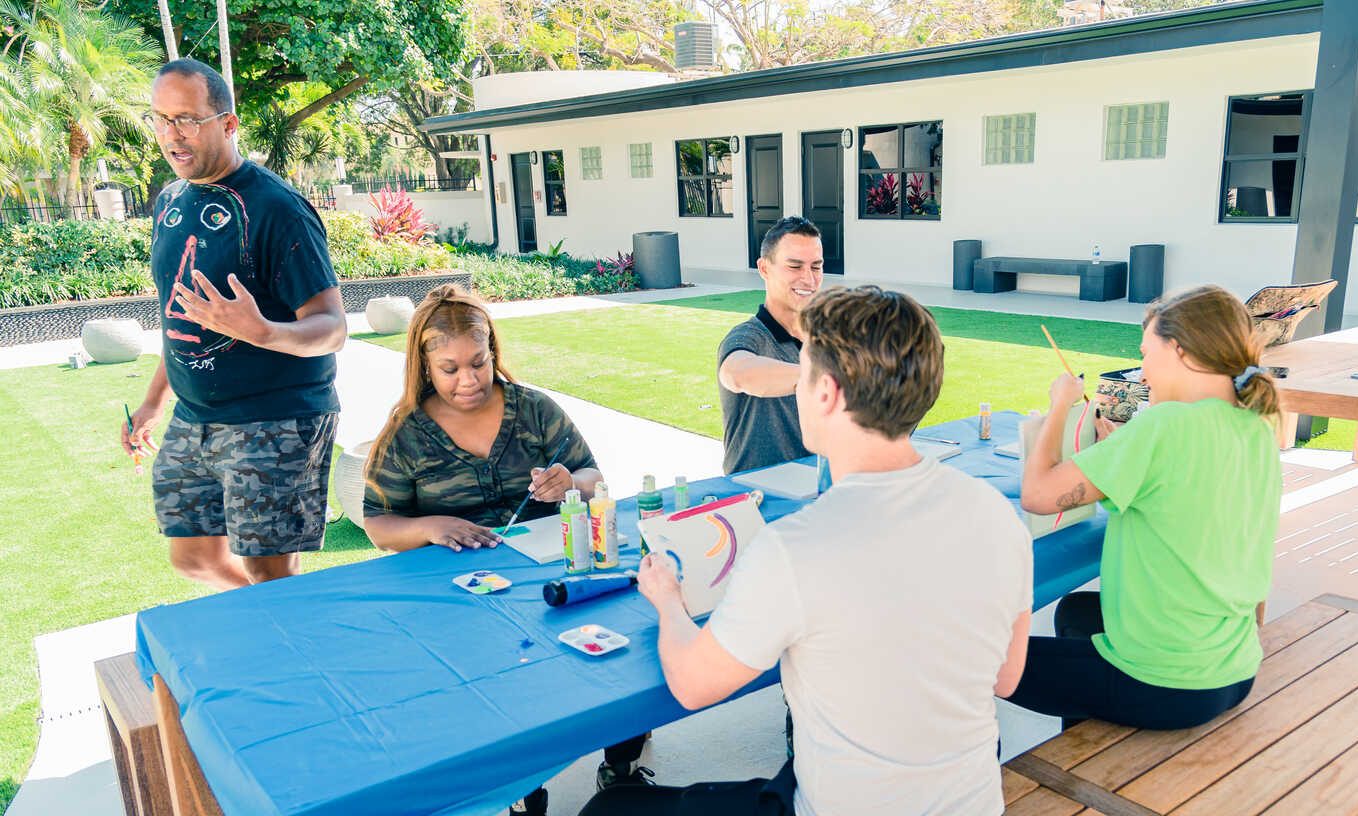
Daily schedules blend individual therapy, skills groups, trauma work, and recovery supports based on your diagnosis and readiness. Canine Assisted Therapy complements EMDR and neurofeedback by lowering arousal during trauma processing. Movement, art, and music therapies help regulate the nervous system and support motivation.
Family is integrated through joint sessions and the Compassion Connections curriculum, so home supports recovery. Discharge planning starts early, with relapse prevention, psychiatry follow-up, and peer support mapped across levels. To see how personalization continues after step-down, learn about our South Florida rehab programs.
Frequently Asked Questions About integrated dual-diagnosis treatment in South Florida
Here are clear answers to common questions patients and families ask:
What does “mental health first” treatment mean?
It means providers address depression, anxiety, PTSD, and other drivers of substance use from day one. Stabilizing symptoms early makes behavior change more achievable.
How does the PHP leveling system support progress?
It is empowerment-based and tied to skills, not punishment. At Level 3, patients access family therapy, therapeutic passes, and fuller programming.
Which therapies are available across levels of care?
Patients may receive CBT, DBT, EMDR, and neurofeedback based on clinical need. SMART Recovery, art, music, and Canine Assisted Therapy complement core work.
How are families involved during treatment?
Families join structured sessions and a bi-weekly Zoom education group with a six-week curriculum. This support improves communication and reduces relapse risk.
Do you support veterans and accept TRICARE East?
Yes, services are military-competent with leadership from a 21-year veteran. TRICARE East is accepted, and staff help navigate VA-related benefits.
What happens if someone returns to use during care?
It is addressed as a lapse, not a failure, with compassion and safety. The team rapidly adjusts the plan to strengthen coping and prevent escalation.
Key Takeaways on Fort Lauderdale Drug Rehab
- Mental health drives recovery, not just abstinence goals.
- Continuum spans detox, residential, PHP, IOP, and OP.
- Small caseloads and directors know every patient.
- Evidence-based therapies include EMDR and neurofeedback.
- Family and military supports are fully integrated.
Integrated, mental health-first care changes the trajectory of recovery. Choosing a Fort Lauderdale Drug Rehab that prioritizes co-occurring treatment helps symptoms improve while you rebuild life skills.
If you are ready to take the next step, the team at Compassion Behavioral Health will meet you with respect and a plan that fits your needs. Call 844-503-0126 to speak with an admissions specialist. Your story matters, and care can start today.
External Sources
- Healthline – Inpatient vs. Outpatient Rehab: Which Is Right for You?
- NCBI Bookshelf – TIP 45: Detoxification and Substance Abuse Treatment
- National Institute of Mental Health – Technology and the Future of Mental Health Treatment