









































Trauma changes the brain. It rewires how threats are perceived, how memories are stored, and how the nervous system responds to the world. PTSD is not a weakness. It is not a failure to cope. It is what happens when the brain does exactly what it was designed to do during a traumatic experience and then cannot find its way back to safety afterward.
At Compassion Behavioral Health, we treat PTSD as the primary clinical condition it is, with the evidence-based depth the diagnosis demands. Our approach is built around EMDR therapy, the gold-standard trauma treatment endorsed by the VA, the American Psychological Association, and the World Health Organization. It is built around dual-diagnosis care for clients whose PTSD co-occurs with depression, anxiety, or substance use. And it is built around a stabilization-first clinical model that does not push clients into intense trauma processing before their nervous system is ready.
Our clients have seen an 88% improvement in PTSD outcomes, verified by third-party clinical research firm Greenspace Health across more than 1,000 patient surveys. That number represents real people who came to us carrying trauma that had shaped every part of their lives, and left with the clinical tools to live differently.
If that is the outcome you are looking for, call 844-503-0126. Our admissions team will listen, answer your questions honestly, and help you understand what level of care is right for you.
What PTSD Actually Is and What It Is Not
Post-Traumatic Stress Disorder is a mental health condition that develops after experiencing or witnessing a traumatic event. It is not simply feeling upset after something bad happens. PTSD involves lasting changes to the brain’s threat-detection and memory systems that cause distressing symptoms to persist long after the traumatic event itself has ended.
PTSD is frequently misunderstood as a condition that only affects combat veterans. It does not. PTSD can follow any experience that overwhelmed the nervous system’s capacity to process and integrate what happened. Childhood abuse, sexual assault, domestic violence, serious accidents, medical emergencies, natural disasters, sudden loss, and witnessing violence are all recognized trauma sources. PTSD can also develop from repeated, lower-intensity traumatic exposures over time, a pattern known as Complex PTSD, which we address separately below.
It is also important to understand what PTSD is not. It is not a character defect, a sign of weakness, or evidence that someone is broken. It is a physiological response to extraordinary circumstances, and it is treatable with the right clinical approach.
The four primary symptom clusters of PTSD:
Re-Experiencing
Intrusive memories, flashbacks, nightmares, and intense psychological or physical distress are triggered by reminders of the trauma. The nervous system does not distinguish between memory and present experience in the same way in PTSD. A sensory cue, a sound, a smell, a specific situation, can trigger a full physiological fear response as though the trauma is happening again right now.
Avoidance
Deliberate avoidance of thoughts, feelings, places, people, conversations, or activities that serve as reminders of the trauma. Avoidance is the nervous system’s self-protection strategy. It reduces immediate distress but prevents the processing that would allow healing to occur. Over time, the world of what is safe gets progressively smaller.
Negative Alterations in Cognition and Mood
Persistent negative beliefs about oneself or the world (‘I am permanently damaged’, ‘nowhere is safe’), distorted blame about the cause of the trauma, chronic negative emotional states including fear, horror, anger, guilt or shame, diminished interest in activities, feelings of detachment from others, and inability to experience positive emotions. This cluster is frequently misidentified as depression and treated without addressing the underlying trauma.
Hyperarousal and Reactivity
Heightened startle response, sleep disturbances, difficulty concentrating, irritability or angry outbursts, hypervigilance, and self-destructive behavior. The nervous system remains on high alert, scanning for threats even in objectively safe environments. This state is exhausting to live in and frequently drives people toward substances as a way to regulate the arousal that will not quiet.
Complex PTSD: When the Trauma Was Prolonged or Repeated
Complex PTSD, or C-PTSD, develops in response to prolonged, repeated, or chronic trauma rather than a single incident. It is most commonly associated with childhood abuse or neglect, domestic violence, human trafficking, prolonged war exposure, or any situation in which the person feels trapped with no way to escape.
C-PTSD shares the four core PTSD symptom clusters but adds three additional dimensions that require specific clinical attention:
Affect Dysregulation
Difficulty managing emotional responses that can appear disproportionate to the immediate trigger. Explosive anger, intense shame spirals, emotional numbness, or rapid emotional swings. The person is not overreacting. The nervous system is responding to the accumulated impact of repeated trauma.
Negative Self-Concept
A deeply held sense of shame, worthlessness, or being fundamentally different from other people. This is not low self-esteem in the ordinary sense. It is a structural belief about one’s own identity built from years of trauma, often from experiences that began in childhood. It is one of the most treatment-resistant features of C-PTSD and requires sustained clinical attention.
Relational Disturbances
Difficulty trusting others, difficulty maintaining relationships, repeated patterns of harmful relational dynamics, and profound fear of intimacy or abandonment. Many people with C-PTSD have never experienced a consistently safe relationship, making the therapeutic relationship itself one of the most powerful tools in treatment. CBH’s dual-diagnosis model, small caseloads, stabilization-first philosophy, and use of EMDR and DBT make our program particularly well-suited to C-PTSD. Clients with complex trauma need clinical stability, relational consistency, and pacing. They do not need to be rushed through a 30-day program.
PTSD and Co-Occurring Conditions: The Dual-Diagnosis Reality
PTSD is one of the most comorbid diagnoses in behavioral health. It rarely presents alone. Understanding what is co-occurring with PTSD, and treating it at the same time, is the difference between temporary symptom reduction and durable, lasting change.
CBH was built around this exact insight. Our founding premise is that mental health conditions drive most of the behavioral struggles that bring people into treatment. For PTSD, that premise is backed by an enormous body of research.
Conditions that most commonly co-occur with PTSD:
- Major Depressive Disorder: present in up to 50% of PTSD cases; the negative cognition and mood cluster of PTSD overlaps significantly with depression, leading to frequent misdiagnosis in both directions
- Alcohol Use Disorder: PTSD is one of the strongest predictors of alcohol misuse; hyperarousal symptoms are frequently self-medicated with alcohol, creating a cycle where alcohol temporarily quiets the nervous system while worsening trauma symptoms over time
- Substance Use Disorders: broadly opioids, cannabis, benzodiazepines, and stimulants are all used as nervous system regulators by people living with untreated PTSD
- Generalized Anxiety Disorder: the persistent hypervigilance of PTSD and the diffuse worry of GAD overlap, and both must be addressed in treatment
- OCD: particularly in cases where trauma has generated intrusive thought content, the overlap between trauma, OCD, and PTSD requires differential assessment
- Borderline Personality Disorder: BPD and C-PTSD have highly overlapping presentations; accurate differential diagnosis is clinically essential
- Traumatic Brain Injury (TBI): particularly relevant in veteran populations; TBI and PTSD present with similar symptoms, including cognitive difficulty, irritability, sleep disruption, and emotional dysregulation, and both require targeted intervention
- Eating Disorders: trauma, particularly sexual trauma, is a strong predictor of eating disorder development; body shame and difficulty tolerating physical sensation are shared features
At CBH, every client receives a comprehensive psychiatric evaluation at admission that assesses the full clinical picture. No condition that is driving the client’s distress gets left off the treatment plan.
How CBH Treats PTSD: The Evidence-Based Approach
PTSD treatment at CBH is not generic trauma-informed care. It is a structured, evidence-based clinical approach built around the interventions that research consistently shows produce the best outcomes for trauma. Our stabilization-first model means we do not push clients into trauma processing before the nervous system is ready. Stabilization comes first. Deeper work follows at the right pace.
EMDR Therapy: Eye Movement Desensitization and Reprocessing
EMDR is the cornerstone of CBH’s trauma treatment approach and the most clinically validated trauma-specific therapy available. It is endorsed as a first-line PTSD treatment by the Department of Veterans Affairs, the American Psychological Association, the World Health Organization, and SAMHSA.
EMDR works by using bilateral stimulation, typically guided eye movements, to help the brain reprocess traumatic memories that have become stuck in a state of incomplete processing. When a traumatic memory is stored in a fragmented, unprocessed state, it remains emotionally and physiologically charged. Every time it is triggered, the person re-experiences the emotional and physical intensity of the original event. EMDR facilitates the processing that allows the memory to be stored as a past event rather than a present threat.
EMDR does not erase traumatic memories. It changes their emotional charge. Clients typically report that after EMDR, they can recall the traumatic event without the overwhelming distress, physical response, or sense of being back inside it. The memory becomes part of the past rather than an intrusion into the present.
At CBH, EMDR is available at the PHP and IOP levels, delivered by clinicians who have completed EMDR training. It is integrated into the broader treatment plan alongside individual therapy, group therapy, and medication management.
Cognitive Behavioral Therapy (CBT) and Trauma-Focused CBT
CBT for PTSD helps clients identify and restructure the distorted beliefs about themselves, others, and the world that develop following trauma. Common trauma-related beliefs such as ‘I should have done something to stop it’, ‘I am permanently damaged’, or ‘I cannot trust anyone’ are not facts. They are the brain’s attempt to make sense of an overwhelming experience. Trauma-focused CBT directly targets these beliefs with structured, evidence-based techniques.
Dialectical Behavior Therapy (DBT)
DBT is particularly critical for clients with Complex PTSD, trauma-related emotional dysregulation, or self-harm history. The distress tolerance and emotion regulation skills in DBT provide clients with the internal stability needed to engage in trauma processing work without becoming destabilized. DBT and EMDR work together directly at CBH: DBT builds the foundation; EMDR does the deeper structural work.
Neurofeedback
Neurofeedback uses real-time monitoring of brain activity to help clients train their nervous systems toward healthier patterns of arousal and regulation. For PTSD, the hyperarousal and hypervigilance symptoms that keep the nervous system in a chronic threat state can be directly targeted through neurofeedback. CBH’s neurofeedback therapist, Tharlene, has extensive clinical experience with trauma populations, including veterans with both PTSD and TBI.
Medication Management
SSRIs and SNRIs are the primary pharmacological options for PTSD and are often a component of comprehensive treatment. For clients who have not responded to prior medication trials, CBH offers GeneSight genetic testing to identify how their specific genetic profile affects medication metabolism. This is particularly useful for clients with a history of failed antidepressant or anti-anxiety medication regimens.
Canine Assisted Therapy (CAT)
CBH’s Canine Assisted Therapy program runs twice per week in the residential setting. For trauma clients, the non-verbal, physiologically regulating experience of working with animals has a distinct clinical value that verbal therapy alone cannot replicate. CAT reduces cortisol, lowers hyperarousal, and builds the safe relational experience that complex trauma clients often lack.
Group Therapy
Trauma-specific group therapy is a component of treatment at every level of care at CBH. For PTSD clients, the experience of sharing trauma history in a controlled, clinically facilitated group setting and being met with understanding rather than judgment is often clinically significant in its own right. The social isolation that accompanies PTSD is addressed directly through the group modality
PTSD Treatment Across the Full Continuum of Care
PTSD severity, particularly in complex presentations, often requires a higher level of care than outpatient therapy alone can provide. CBH’s full continuum ensures that clients receive the right intensity of treatment at every stage of their recovery.
Residential Treatment Hollywood, FL
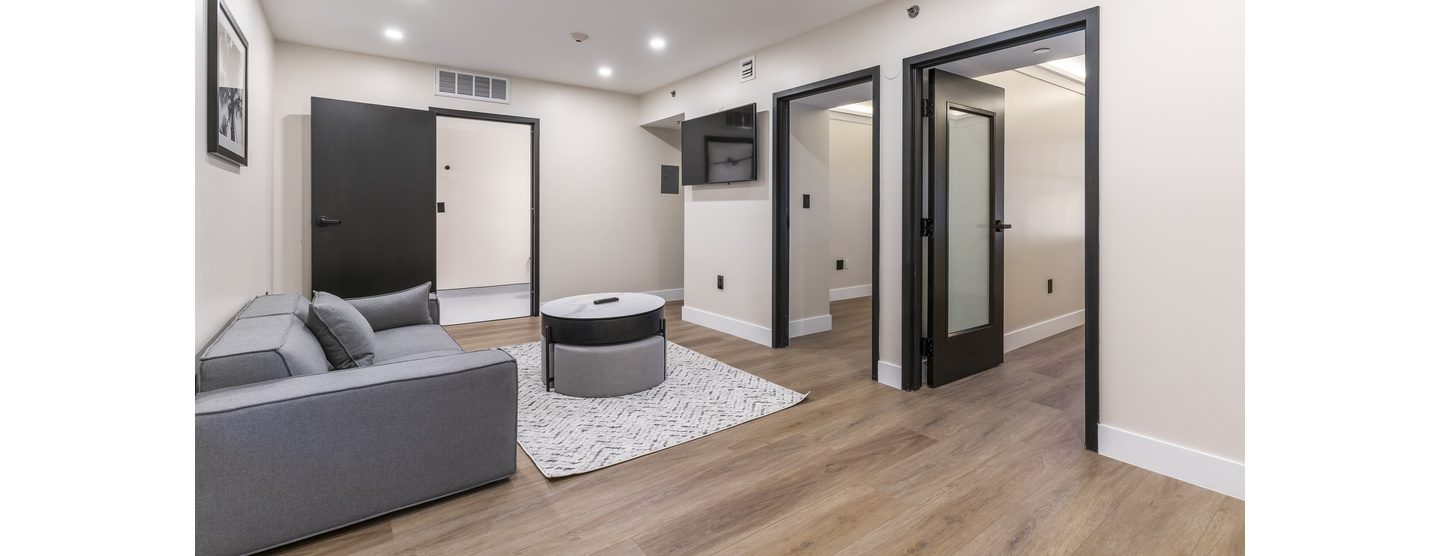
For clients with severe PTSD, particularly those with co-occurring substance use, depression, or chronic trauma histories, CBH’s 29-bed residential program provides the clinical structure, physical safety, and relational stability that trauma processing requires. Clients are removed from the environments and triggers that maintain their symptoms and placed in a contained, therapeutic setting where foundational stabilization work can begin.
Caseloads are held to 8 to 10 clients per therapist. The Clinical Director knows every client by name. For trauma clients whose histories include feeling invisible, unheard, or unsafe in institutional settings, this operational reality matters clinically. Residential trauma treatment at CBH includes individual therapy, daily group therapy, psychiatric evaluation and medication management, neurofeedback, and Canine Assisted Therapy twice per week.
Partial Hospitalization Program (PHP) Fort Lauderdale, FL
PHP provides a minimum of 20 hours of structured therapy per week while clients live in supervised housing. This is where the deeper trauma processing work begins in earnest. EMDR is available at the PHP level, introduced when the clinical team determines the client has the stabilization and distress tolerance skills to engage with it safely. Family therapy begins at PHP. Community reintegration begins. Clients practice the skills built in residential settings in incrementally more complex real-world situations.
Intensive Outpatient Program (IOP) Fort Lauderdale, FL
IOP provides at least 12 hours of therapy per week while clients rebuild full independence. EMDR continues for clients who began it in PHP. DBT skills are applied to real-life situations. The clinical team provides coaching and accountability as clients navigate the realities of living outside a residential structure with a trauma history that is in active recovery rather than simply being managed.
PTSD Treatment for Veterans and Active-Duty Military
Veterans and active-duty military face a specific convergence of conditions that requires clinically informed, culturally competent care. PTSD, Traumatic Brain Injury, moral injury, military sexual trauma (MST), and substance use frequently present together in this population, and they interact in ways that demand a clinical team that understands military culture, not just mental health treatment.
CBH is PsychArmor certified for military-competent care. Spencer, a 21-year veteran and member of CBH’s clinical team, provides peer credibility, cultural understanding, and lived experience that affects how veteran clients engage with treatment from the first day. CBH accepts TRICARE East and works directly with the VA on case management and aftercare planning.
What Makes Veteran PTSD Clinically Different
Veteran PTSD frequently involves moral injury alongside traditional trauma symptoms. Moral injury is the damage done to a person’s moral framework by participating in, witnessing, or failing to prevent events that violate their values. It involves profound guilt, shame, and spiritual distress that does not respond to standard PTSD treatment in the same way. CBH’s clinical team addresses moral injury explicitly, not as an afterthought.
Traumatic Brain Injury is also common in veteran populations and presents with symptoms that overlap significantly with PTSD: cognitive difficulty, irritability, emotional dysregulation, sleep disruption, and impaired concentration. Neurofeedback is particularly relevant for veteran clients with TBI, as it directly targets dysregulated patterns of brain activity that underlie both conditions.
VA Benefits and Insurance for Veterans at CBH
CBH is in-network with TRICARE East and works directly with the VA on authorization and case management. For veterans navigating the VA system, CBH’s admissions team provides direct support through the authorization process. Call 844-503-0126 to speak with our veterans admissions team. We will verify your benefits, walk you through your options, and help you understand what is covered before you make any decisions.
PTSD and Substance Use: When Both Are Present
PTSD is one of the strongest predictors of substance use disorder in the clinical literature. Research consistently shows that between 30 and 50 percent of people seeking substance use treatment meet diagnostic criteria for PTSD. The pattern is predictable and well-documented: trauma drives hyperarousal and intrusive symptoms; substances offer temporary regulation; the substances create their own problems; PTSD symptoms worsen without them; and the person is now managing two conditions that each make the other worse.
Alcohol is the most commonly used substance among people self-medicating for PTSD. Alcohol reduces acute hyperarousal and allows sleep, which is why it becomes such an entrenched coping mechanism. But alcohol also fragments REM sleep, increases baseline anxiety, and worsens emotional dysregulation over time, meaning the PTSD the person is trying to manage becomes progressively harder to manage.
Treating substance use without treating PTSD is clinically incomplete. The nervous system that drove the person to substances in the first place has not changed. Without the clinical tools to manage trauma-related arousal and intrusion, relapse is highly probable. CBH treats PTSD and substance use simultaneously, with equal clinical weight given to both.
If you or someone you love is carrying both trauma and substance use, you do not have to choose which to address first. Call 844-503-0126. That is exactly the population our dual-diagnosis model was designed for.
What Makes CBH Different for PTSD Treatment in Florida
- 88% improvement in PTSD outcomes, verified by Greenspace Health across more than 1,000 patient surveys
- EMDR therapy is delivered within a dual-diagnosis residential and outpatient framework, not as a standalone outpatient service
- PsychArmor is certified for military-competent care, with a 21-year veteran on the clinical team
- In-network with TRICARE East and working directly with the VA on authorizations and case management
- Neurofeedback therapy for hyperarousal, TBI overlap, and nervous system regulation particularly relevant for veteran and complex trauma clients
- 29-bed intimate residential program with a Clinical Director knowing every client by name
- Caseloads of 8 to 10 clients per therapist trauma clients receive meaningful individual therapy time
- DBT available for Complex PTSD and trauma-related emotional dysregulation
- Canine Assisted Therapy twice per week non-verbal physiological regulation for trauma populations
- GeneSight genetic testing for clients who have not responded to prior psychiatric medication trials
- Full continuum from residential through outpatient one clinical philosophy, no handoff gaps
- Joint Commission accredited, NAMI affiliated, AHCA, and DCF licensed
- 633+ Google reviews across both locations
Frequently Asked Questions About PTSD Treatment
What is the Most Effective Treatment for PTSD?
EMDR (Eye Movement Desensitization and Reprocessing) and trauma-focused Cognitive Behavioral Therapy are consistently identified as the most evidence-supported treatments for PTSD by the VA, the APA, the World Health Organization, and SAMHSA. EMDR is particularly effective for clients with clear traumatic memory content. Trauma-focused CBT addresses the distorted beliefs about self and world that trauma creates. At CBH, both are available within our dual-diagnosis residential and outpatient framework, integrated with medication management and neurofeedback where clinically indicated.
What is the Difference between PTSD and Complex PTSD?
PTSD typically follows a single traumatic incident or a discrete set of events. Complex PTSD (C-PTSD) develops from prolonged, repeated, or chronic trauma, particularly when the person could not escape the situation, such as childhood abuse, domestic violence, or repeated combat exposure. C-PTSD shares the four core PTSD symptom clusters but also involves affect dysregulation, a deeply negative self-concept, and significant relational disturbances. C-PTSD often requires longer treatment duration and a more carefully paced approach to trauma processing. CBH’s clinical model is designed for both.
Does EMDR actually work for PTSD?
Yes. EMDR has one of the strongest evidence bases of any trauma-specific therapy. The VA and the Department of Defense recommend it as a first-line treatment for PTSD. Multiple randomized controlled trials have demonstrated significant symptom reduction across diverse trauma populations, including combat veterans, sexual assault survivors, and accident survivors. The World Health Organization endorses it specifically for PTSD. Many clients who have not responded adequately to talk therapy alone experience significant change through EMDR.
How long does PTSD Treatment take?
PTSD treatment duration at CBH is individualized based on the severity of symptoms, the nature of the trauma history, and the presence of co-occurring conditions. Residential treatment typically spans 25 to 45 days. PHP follows for approximately 45 days. IOP follows for approximately two months. Complex PTSD, particularly with a long trauma history or significant co-occurring conditions, frequently requires longer engagement. Research is unambiguous that longer treatment produces more durable outcomes for PTSD. CBH does not operate on arbitrary timelines. Treatment continues for as long as it is clinically indicated.
Can PTSD be treated at the same time as Addiction?
Yes, and for the majority of clients presenting with both, it should be. Treating addiction without addressing PTSD leaves the nervous system dysregulation that drove substance use intact, making relapse highly probable. CBH’s dual-diagnosis model treats PTSD and substance use simultaneously from the first day of admission. Both conditions receive equal clinical weight throughout the treatment plan.
Does Insurance Cover PTSD Treatment?
CBH is in-network with Aetna, Blue Cross Blue Shield, Cigna, Optum, Curative, TRICARE East, and the VA. Most commercial insurance plans cover residential and outpatient mental health treatment, including PTSD. Call 844-503-0126, and our admissions team will verify your benefits at no cost before you make any decisions. We will explain exactly what is covered, what is not, and what your out-of-pocket expenses look like.
What is Moral Injury, and how is it different from PTSD?
Moral injury is the damage done to a person’s moral and ethical framework by participating in, witnessing, or failing to prevent events that violate their core values. It is distinct from PTSD in that it is not primarily a fear response it is a profound sense of guilt, shame, and spiritual distress arising from the meaning the person assigns to what happened. Moral injury is most common in veterans, first responders, and healthcare workers. It can co-occur with PTSD or present independently. Standard PTSD treatments do not always adequately address moral injury. CBH’s clinical team is trained to assess and treat moral injury as a distinct clinical presentation.
Is Inpatient or Residential Treatment necessary for PTSD?
Residential treatment is indicated for PTSD when symptoms are severe enough to significantly impair daily functioning, when co-occurring conditions like substance use or depression require a higher level of clinical support, or when the person’s current environment is actively unsafe or retriggering. It is also appropriate when prior outpatient treatment has produced limited results. Not every person with PTSD needs residential care. CBH’s admissions team will help you identify the right level of care based on an honest clinical assessment, not a default recommendation.
Trauma Happened in the Past. It Does Not Have to Define the Rest of Your Life.
PTSD is not permanent. The brain that was changed by trauma can change again with the right clinical intervention. The evidence is clear. The outcomes are real. At Compassion Behavioral Health, 88% of our clients experienced meaningful improvement in PTSD symptoms. That is not a marketing claim. It is a verified clinical outcome from third-party research across more than 1,000 people who sat where you are sitting now.
If you or someone you love is living with PTSD, whether from a single event, a lifetime of repeated trauma, military service, sexual violence, childhood experiences, or any other source, we are ready to help. No judgment. No rushing. No one-size-fits-all program.
Call 844-503-0126 today. Our admissions team is available to listen, answer every question honestly, verify your insurance, and help you take the next step at your own pace. Stories change here.
