





CBH’s residential treatment program in Hollywood, Florida, is where the foundational clinical work of mental health recovery begins. Not addiction treatment with mental health included. Mental health treatment, with co-occurring substance use addressed simultaneously from day one.
The outcomes are third-party verified: 159% improvement in depression, 167% improvement in anxiety, and 88% improvement in PTSD, measured by Greenspace Health across more than 1,000 patient surveys. These numbers came from real clients who went through this program.
The operational difference between Compassion Behavioral Health and a larger mental health facility in Florida is not philosophical. It is structural. Twenty-nine beds means your therapist carries 8 to 10 clients, not 20. It means the Clinical Director knows your name. It means your care plan is built around your actual clinical picture, not a template. If you are looking at residential mental health treatment centers in Florida, call 844-503-0126 now. Our admissions team is available 24 hours a day, and same-day admissions are possible in many cases.
Mental Health Facilities in Florida: What Separates CBH from the Rest
Florida has one of the highest concentrations of behavioral health treatment centers in the United States. The quality varies widely. Most facilities in South Florida were built primarily around addiction treatment and added mental health services as an expansion. CBH was built the other way around. Mental health is the primary clinical identity. Substance use is treated as the co-occurring condition it almost always is, alongside the mental health diagnosis that is driving it.
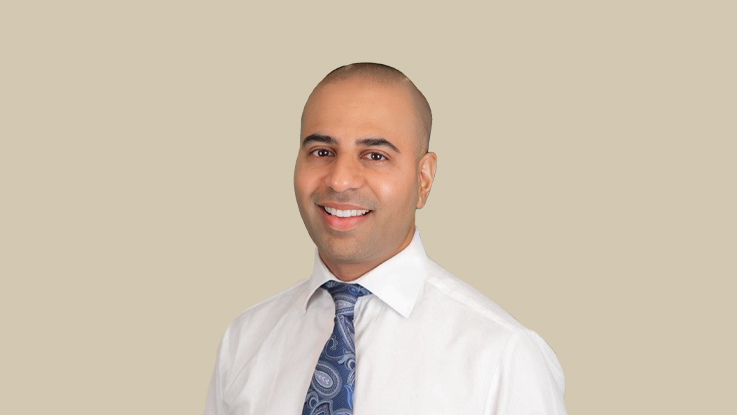
Dr. Daud, CBH’s Medical Director, is board-certified in both psychiatry and addiction psychiatry. That dual specialization is not a credential detail. It is the clinical architecture of the entire residential program. Every client’s treatment plan is built from the psychiatric assessment outward, with the mental health diagnosis as the primary clinical target.
What to Look for When Comparing Residential Mental Health Treatment Centers in Florida
- When evaluating residential mental health facilities in Florida, the following factors separate programs that produce durable outcomes from those that produce short-term stabilization.
- Length of treatment: Thirty-day programs are the industry standard. They are also clinically insufficient for most serious mental health presentations. CBH’s length of stay is driven by clinical progress, not arbitrary timelines.
- Accreditation: Joint Commission accreditation, AHCA licensing, and DCF licensure are the baseline standards. CBH holds all three, along with NAMI affiliation.
- Caseload size: The ratio of clients to therapists determines the actual quality of individual clinical attention. CBH maintains 8 to 10 clients per therapist. Industry norms are significantly higher.
- Psychiatric specialization: A residential program that treats complex mental health conditions requires a board-certified psychiatrist on site, not a consulting psychiatrist available by phone. CBH’s Medical Director is present and involved in the clinical work daily.
- Dual diagnosis capability: If both a mental health condition and a substance use disorder are present, the program must be equipped to treat both simultaneously. CBH’s dual diagnosis model is the foundational reason the organization exists.
Mental Health Conditions Treated in CBH’s Residential Program
CBH’s 29-bed residential program treats the following mental health conditions as primary diagnoses. If a co-occurring substance use disorder is present, both are treated simultaneously from the first day of admission.
- Depression, including Major Depressive Disorder, treatment-resistant depression, and Persistent Depressive Disorder
- Anxiety Disorders, including Generalized Anxiety Disorder, Panic Disorder, Social Anxiety Disorder, and high-functioning anxiety
- PTSD and Trauma, including Complex PTSD, moral injury, and military sexual trauma
- OCD, including all subtypes, with Exposure and Response Prevention as the primary behavioral treatment
- Bipolar Disorder, including Bipolar I, Bipolar II, and Cyclothymia
- Schizophrenia and Psychotic Spectrum Disorders, including schizoaffective disorder and first-episode psychosis
- Attachment Disorder in Adults, including trauma-rooted relational patterns treated with DBT and EMDR preparation
- Dual Diagnosis, meaning any combination of mental health and substance use conditions treated simultaneously
Call 844-503-0126 if your condition is not listed. Our admissions team will assess whether CBH’s residential program is the right clinical fit for your specific situation.
What a Day in CBH’s Residential Program Looks Like
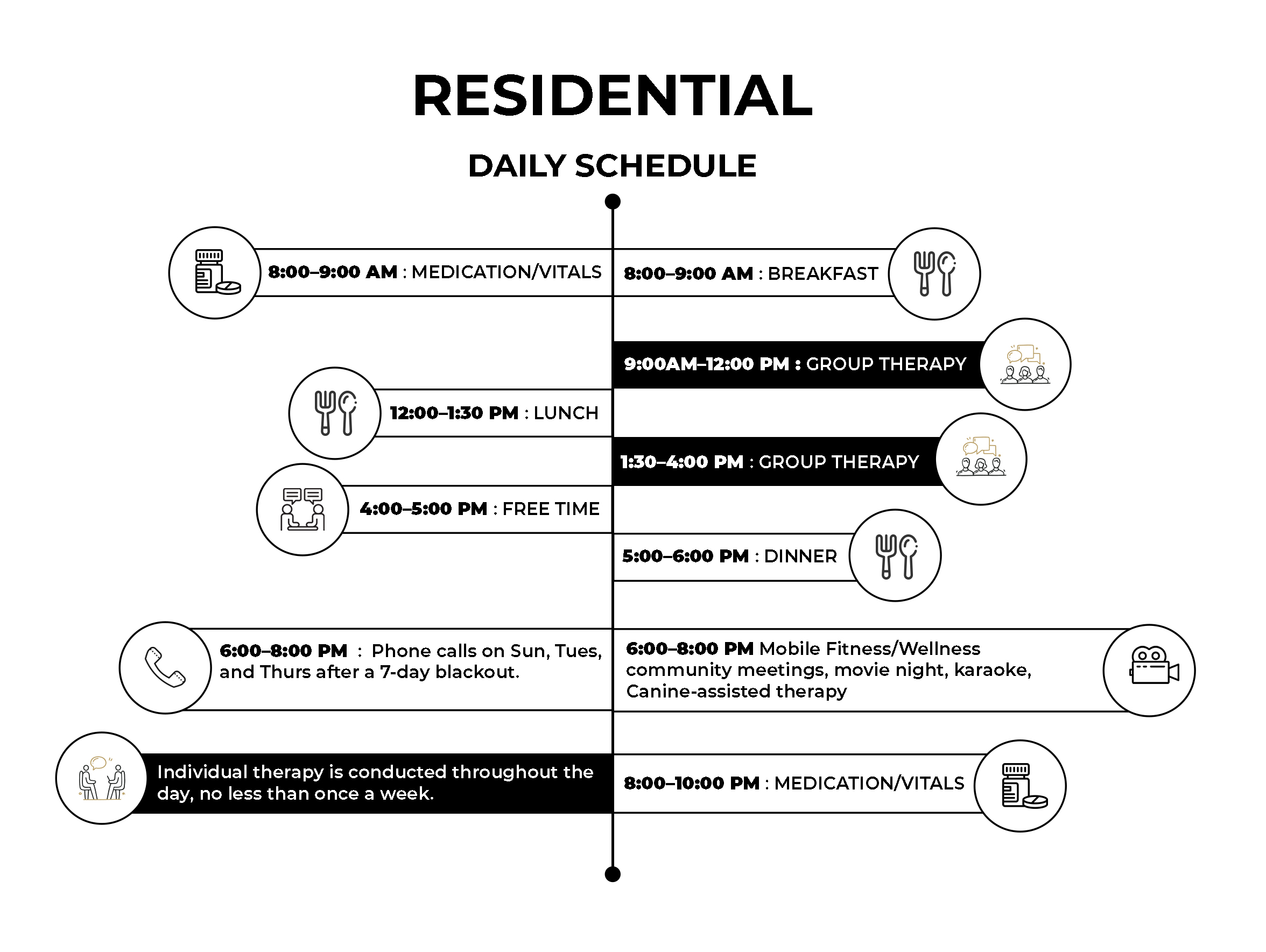
Residential treatment at CBH is an active, structured clinical program from early morning through evening. Routine itself is a clinical tool for conditions including depression, bipolar disorder, and anxiety, where the erosion of structure is both a symptom and a driver of deterioration. Here is what a typical day in the residential program includes.
Morning
The day begins with a nutritious breakfast followed by morning groups or educational workshops. Specialized therapy sessions are scheduled according to individual treatment plans. Morning structure is consistent seven days a week, including weekends.
Daytime
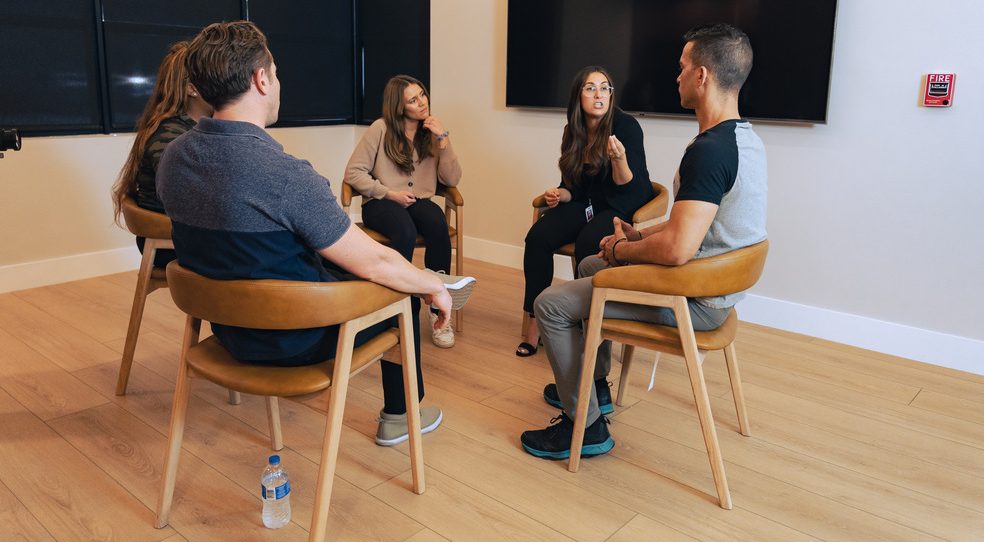
Individual therapy sessions are scheduled throughout the day. Each client receives individual therapy no less than once per week, and more frequently depending on clinical need. Group therapy runs daily and covers cognitive restructuring, DBT skills, trauma processing foundations, dual diagnosis education, communication skills, and relapse prevention. Psychiatric consultation and medication management are available throughout the treatment day.
Neurofeedback sessions are scheduled for clients whose treatment plans include this modality. Canine Assisted Therapy runs twice per week as a clinical intervention for nervous system regulation, physiological calming, and the building of uncomplicated relational experience for clients with trauma and attachment presentations.
Physical Fitness
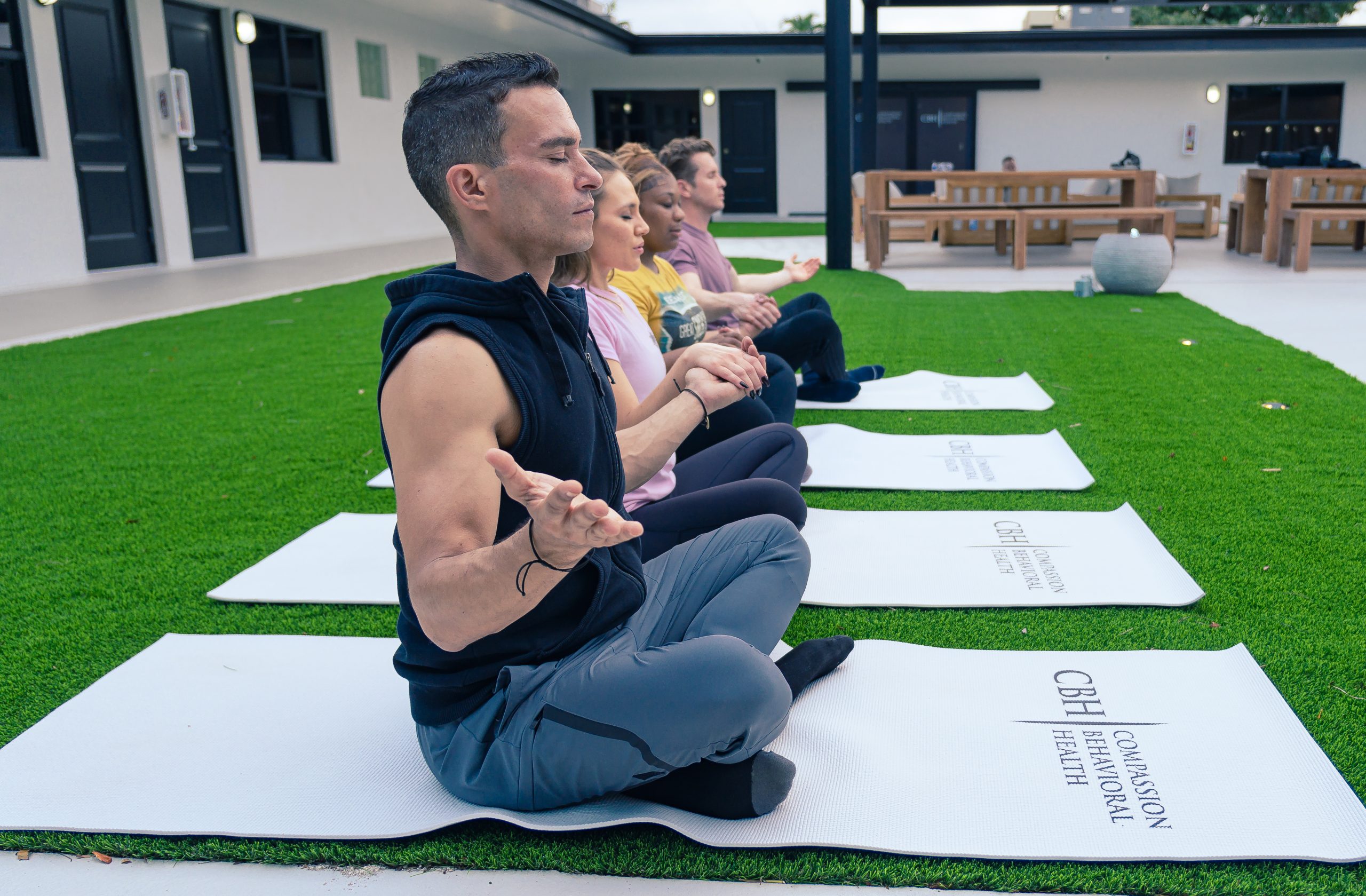
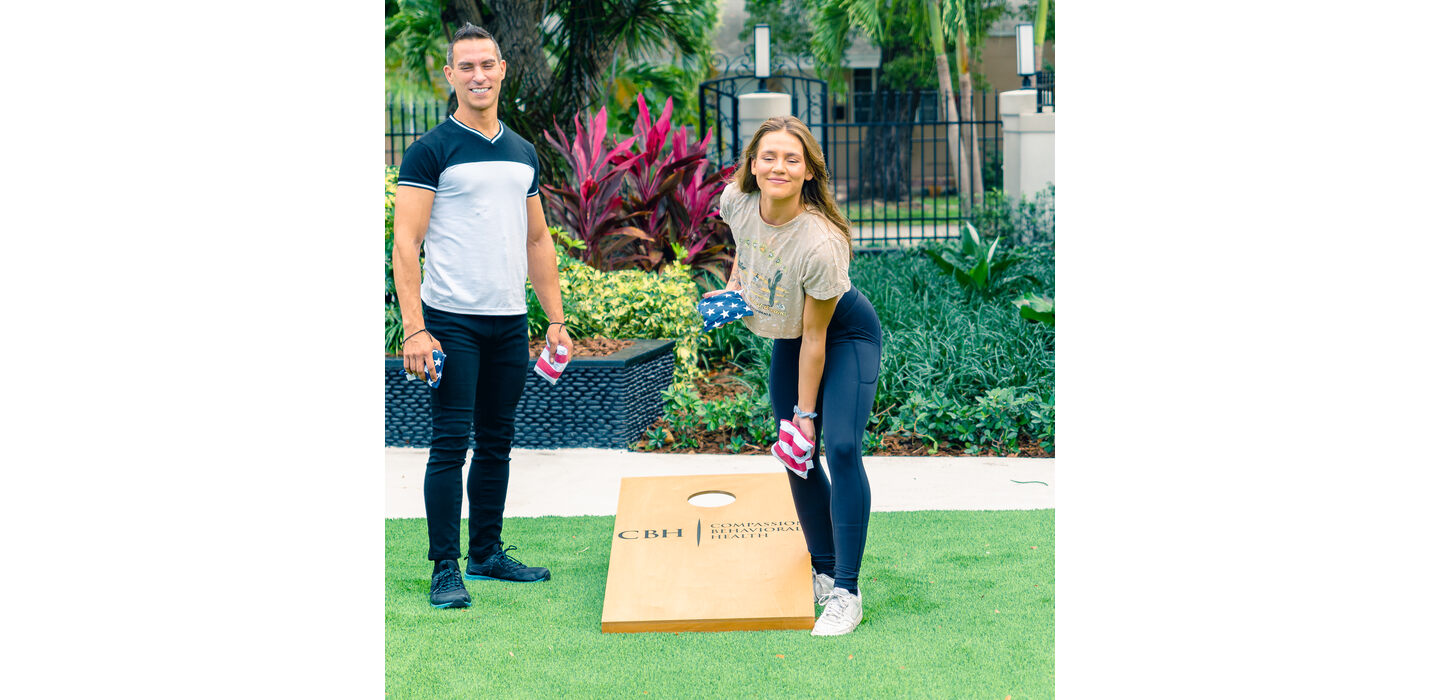
Structured physical fitness programming runs three times per week. Exercise has strong evidence as an adjunct treatment for depression, anxiety, and PTSD. At CBH it is a built-in component of the treatment week, not an optional activity.
Evening
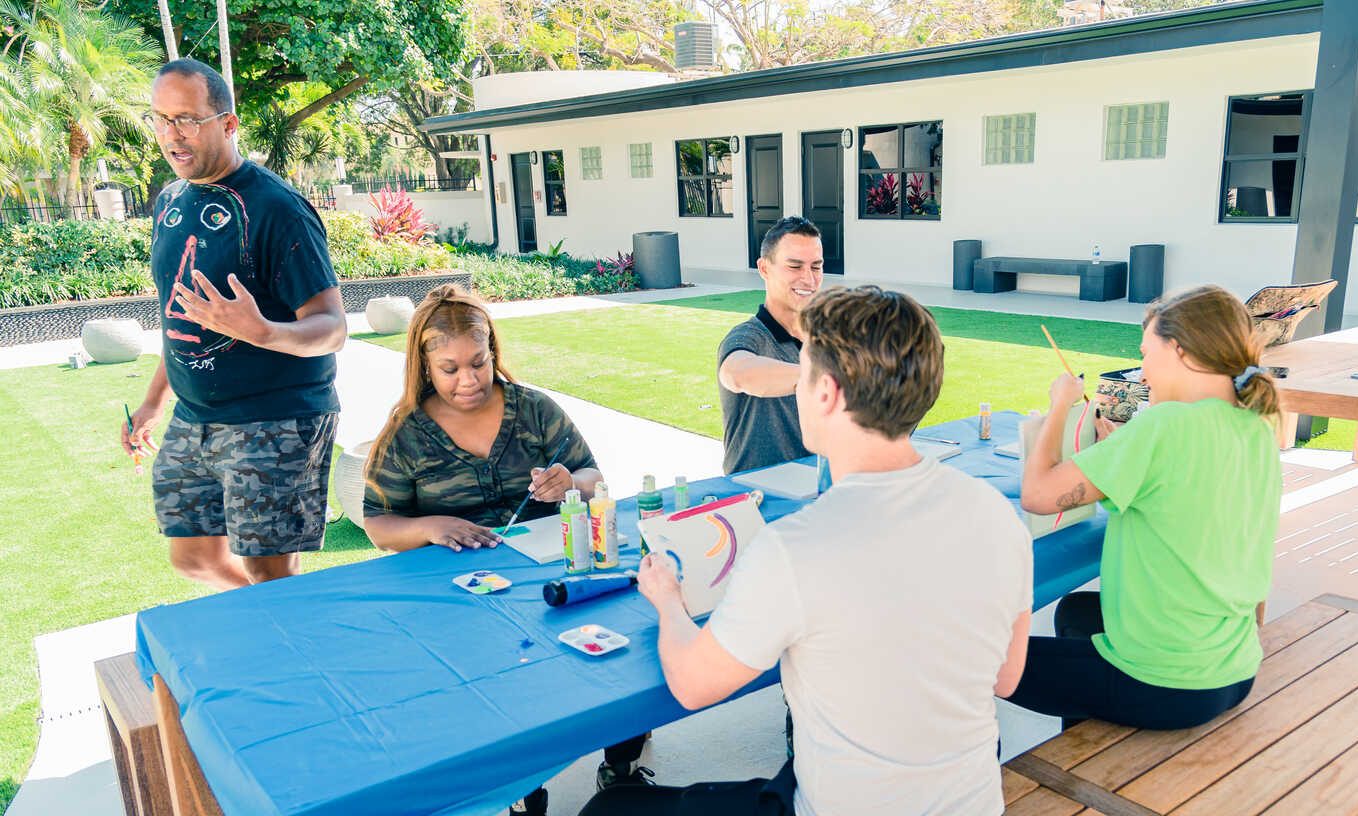
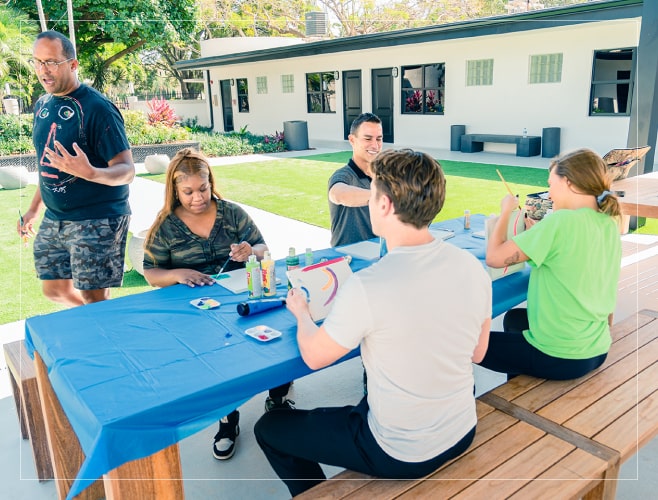
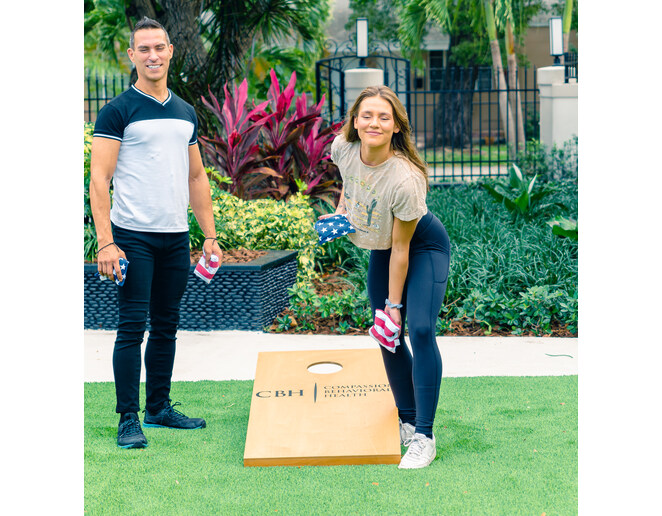
Evening programming includes dinner, group meetings, and structured activities that vary throughout the week. Outdoor movie nights, art sessions, and music evenings are part of the weekly schedule. Structured social engagement in a therapeutic community is a clinical component of residential treatment, building the peer connection and belonging that mental health recovery depends on.
Evidence-Based Therapies in CBH’s Residential Program for Mental Health
Every therapy modality used in CBH’s residential program is selected for a specific clinical purpose. These are not generic behavioral health services. Each is matched to specific clinical targets within each client’s individualized treatment plan.
- Cognitive Behavioral Therapy (CBT): the gold-standard psychological treatment for depression, anxiety, and OCD, delivered in individual and group formats throughout the residential stay
- Dialectical Behavior Therapy (DBT): builds distress tolerance, emotional regulation, mindfulness, and interpersonal effectiveness skills that are foundational for clients with trauma, bipolar disorder, and attachment presentations
- Neurofeedback: addresses nervous system dysregulation at the physiological level for PTSD hyperarousal, anxiety, depression, and cognitive symptoms of mood disorders
- Psychiatric Medication Management: overseen by Dr. Daud, with daily clinical visibility that monthly outpatient appointments cannot replicate
- GeneSight Genetic Testing: available for clients with treatment-resistant conditions where prior medication trials have not produced an adequate response
- Canine Assisted Therapy (CAT): twice weekly, clinical-grade physiological regulation and relational experience for trauma and attachment disorder clients
- Group Therapy: daily across multiple formats, providing peer connection, shared experience, and structured skill reinforcement
Who Is Right for Residential Mental Health Treatment
Residential mental health treatment is appropriate when the severity of symptoms, safety concerns, or the failure of outpatient care require the level of clinical support and structure that only a 24/7 program can provide. The following situations commonly indicate residential-level care.
- Mental health symptoms that are severe enough to significantly impair daily functioning, including work, relationships, and basic self-care
- Active suicidal ideation or a recent suicide attempt that requires 24/7 clinical monitoring in a safe environment
- Outpatient therapy or IOP that has not produced adequate symptom relief or stability
- Co-occurring substance use disorder that requires medical detox and simultaneous psychiatric treatment
- A recent psychiatric hospitalization, where the transition directly to outpatient care is clinically insufficient
- A diagnosis that requires close psychiatric observation during the medication initiation or adjustment period, including schizophrenia, bipolar disorder, or treatment-resistant depression
- A home environment that is actively unsafe, destabilizing, or incompatible with recovery
Not everyone with a mental health condition needs residential care. CBH’s admissions team provides an honest clinical assessment of the right level of care based on the actual clinical picture, not a default recommendation toward the highest level. Call 844-503-0126, and we will give you a straight answer.
CBH’s Residential Program: Location, Setting, and Practical Information
Hollywood, Florida
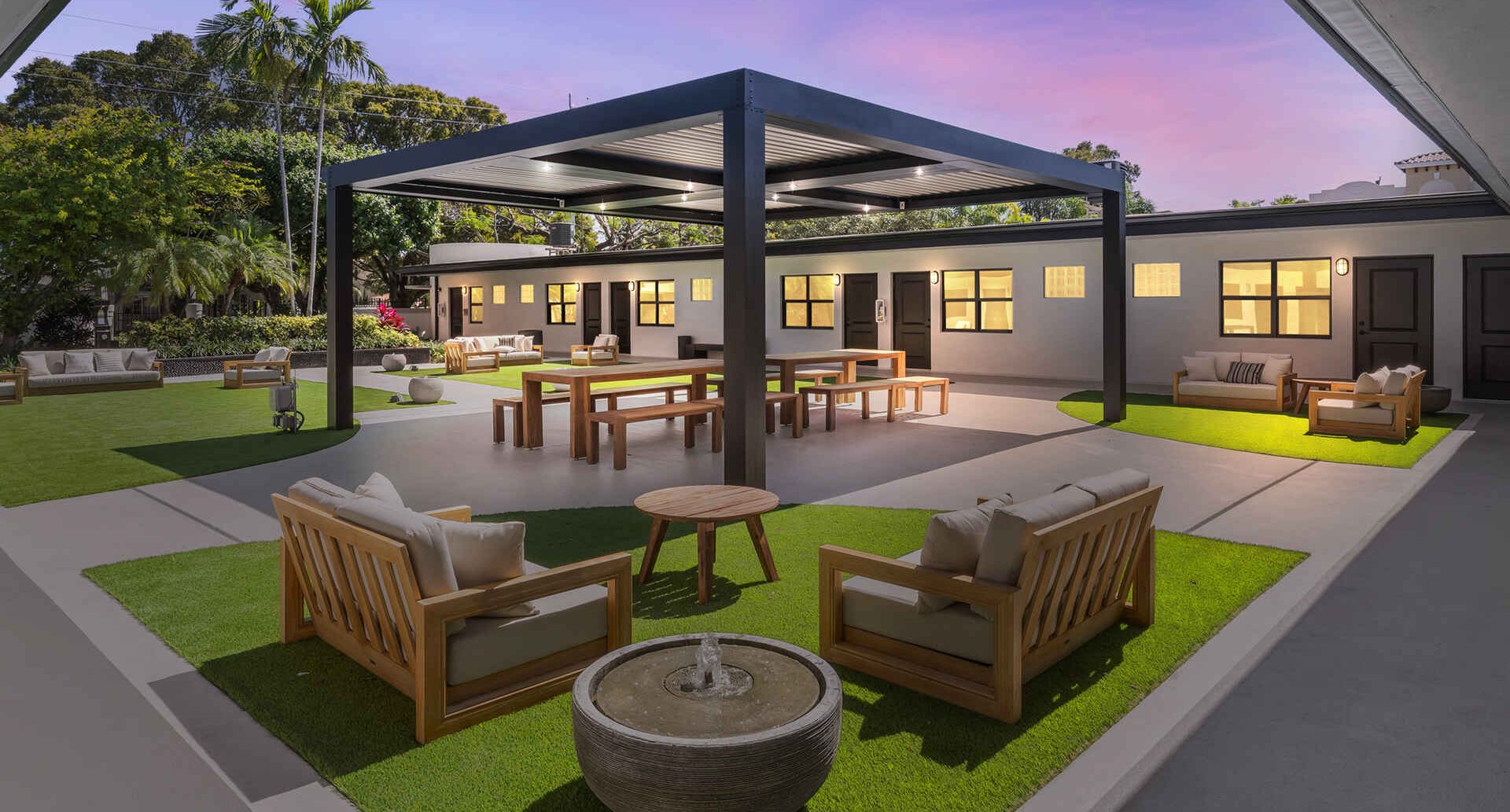
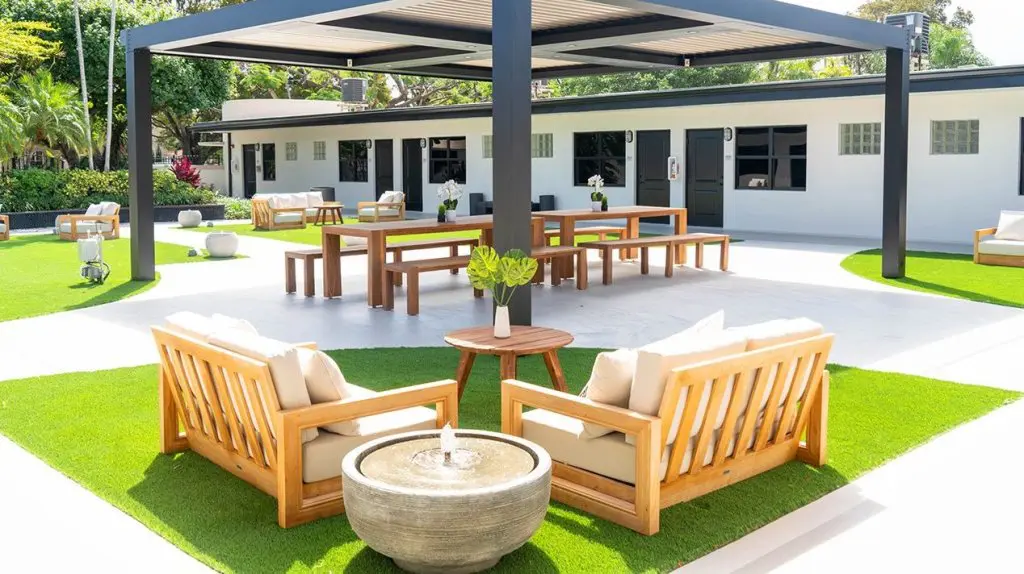
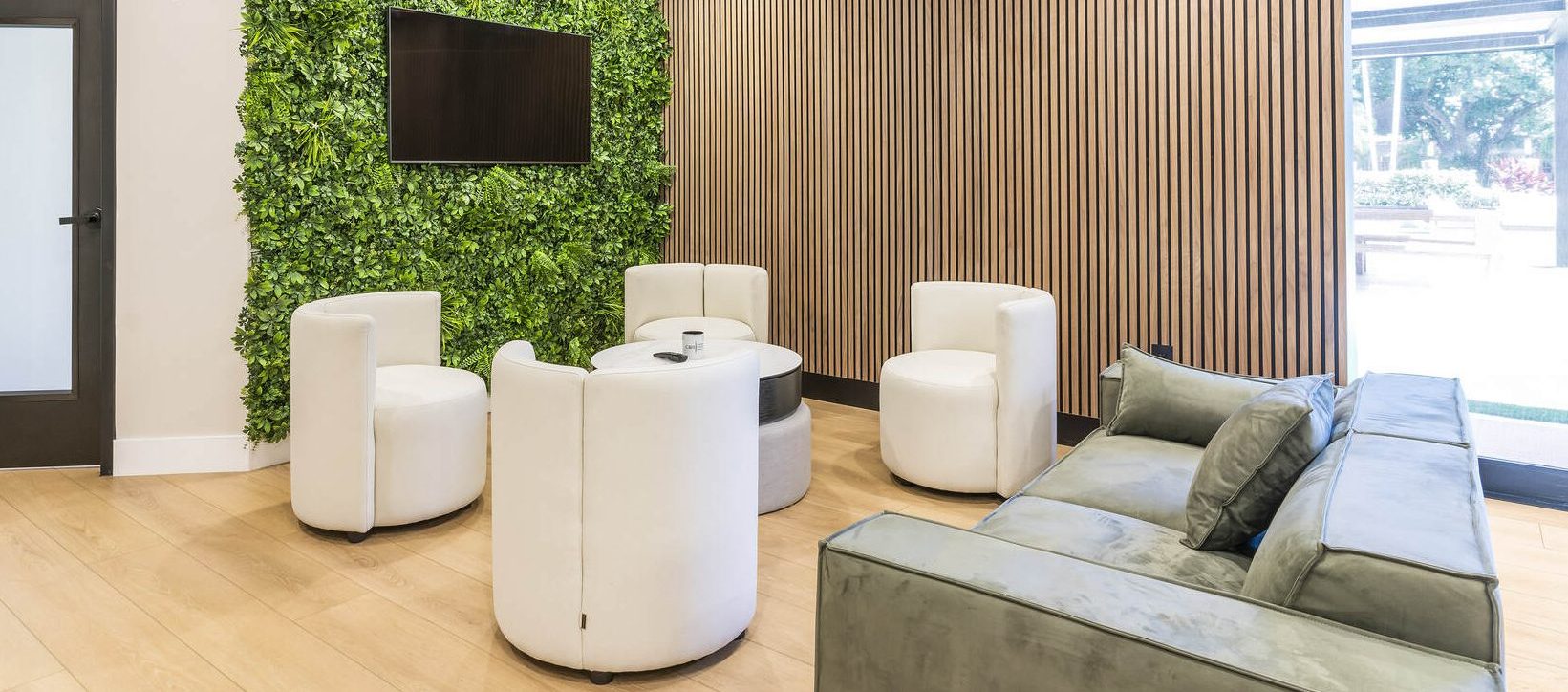
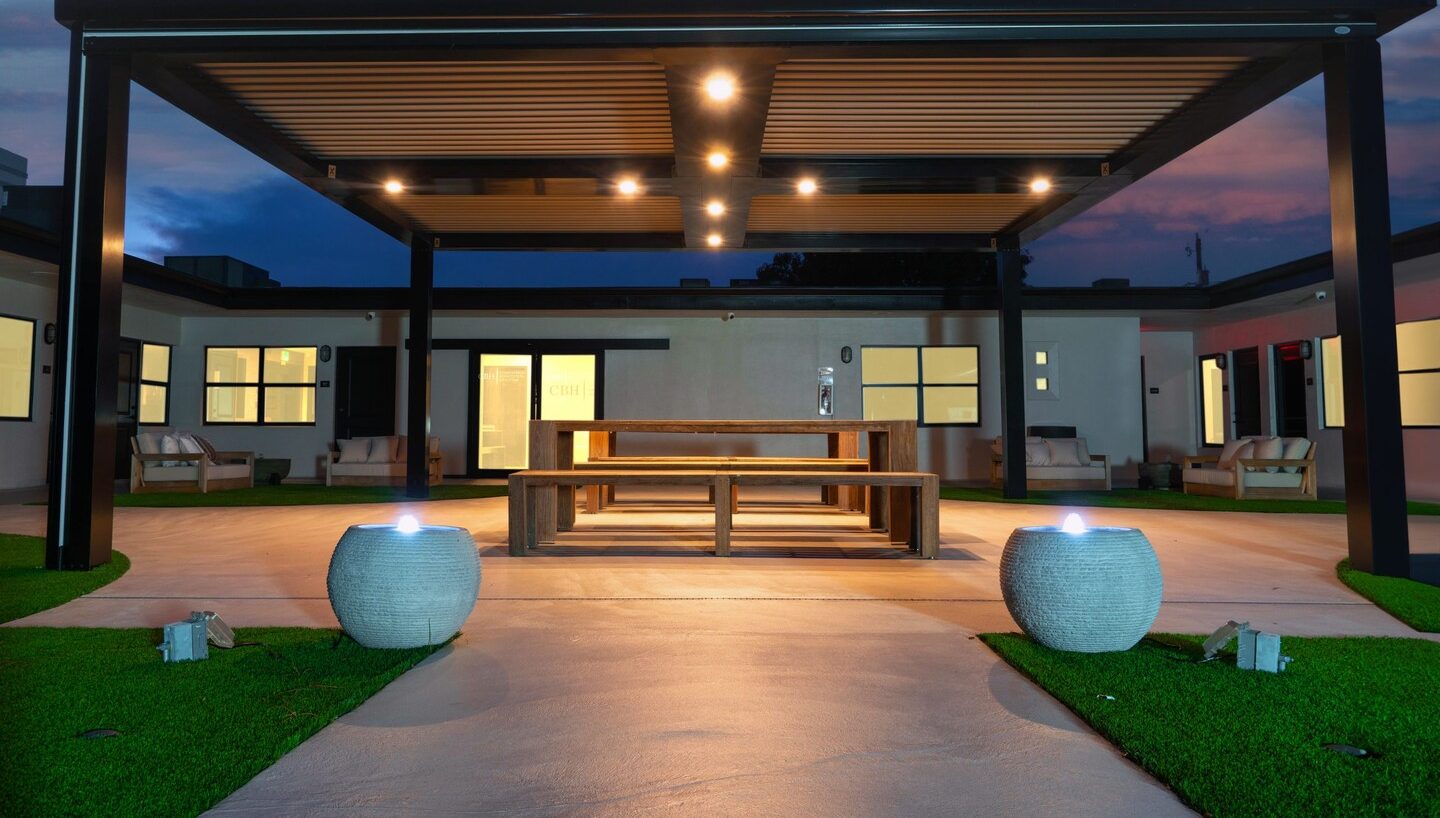
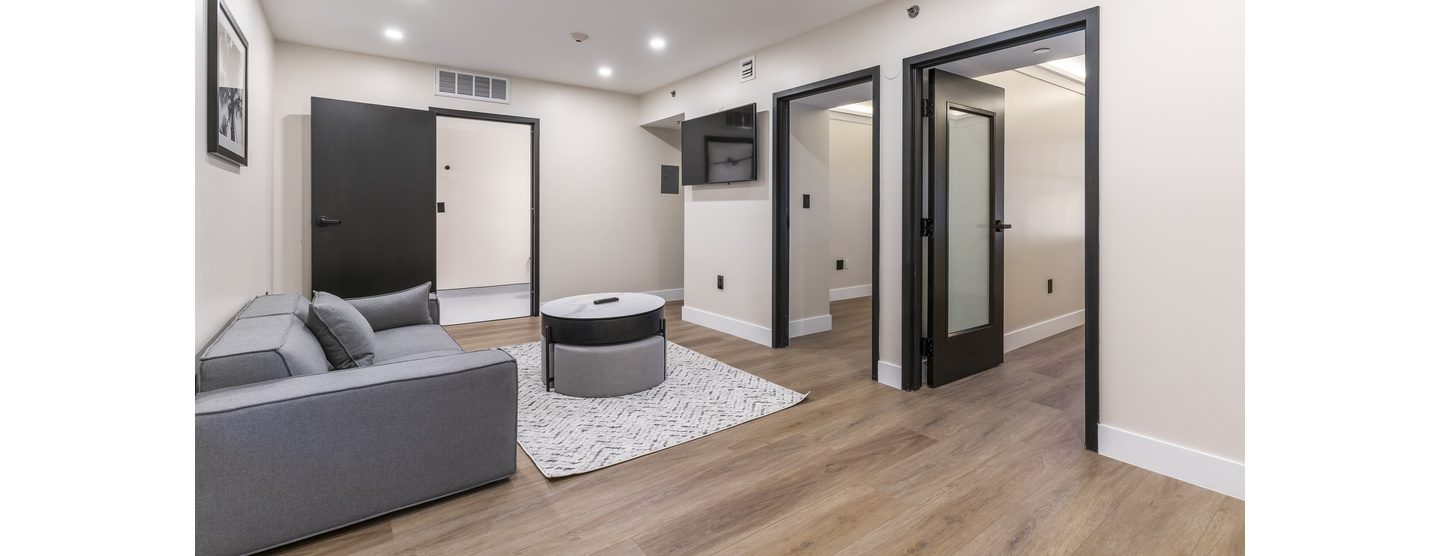
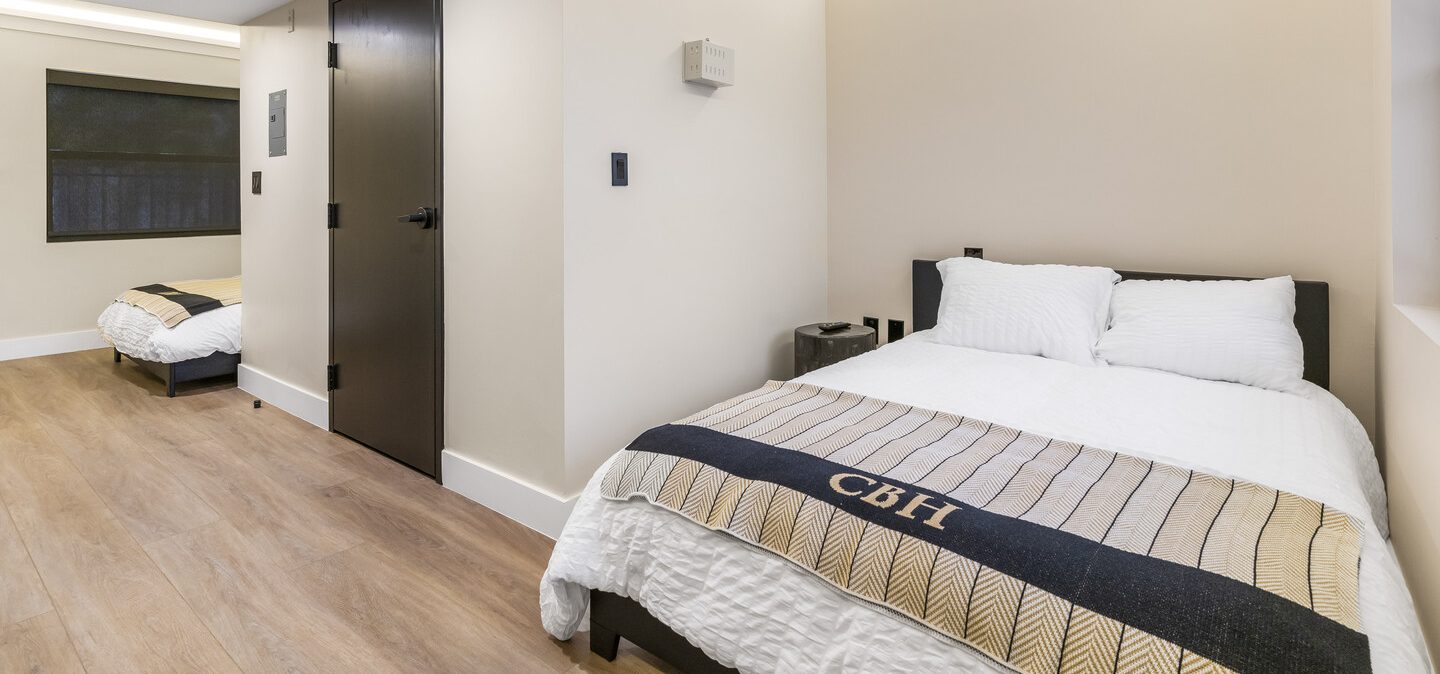
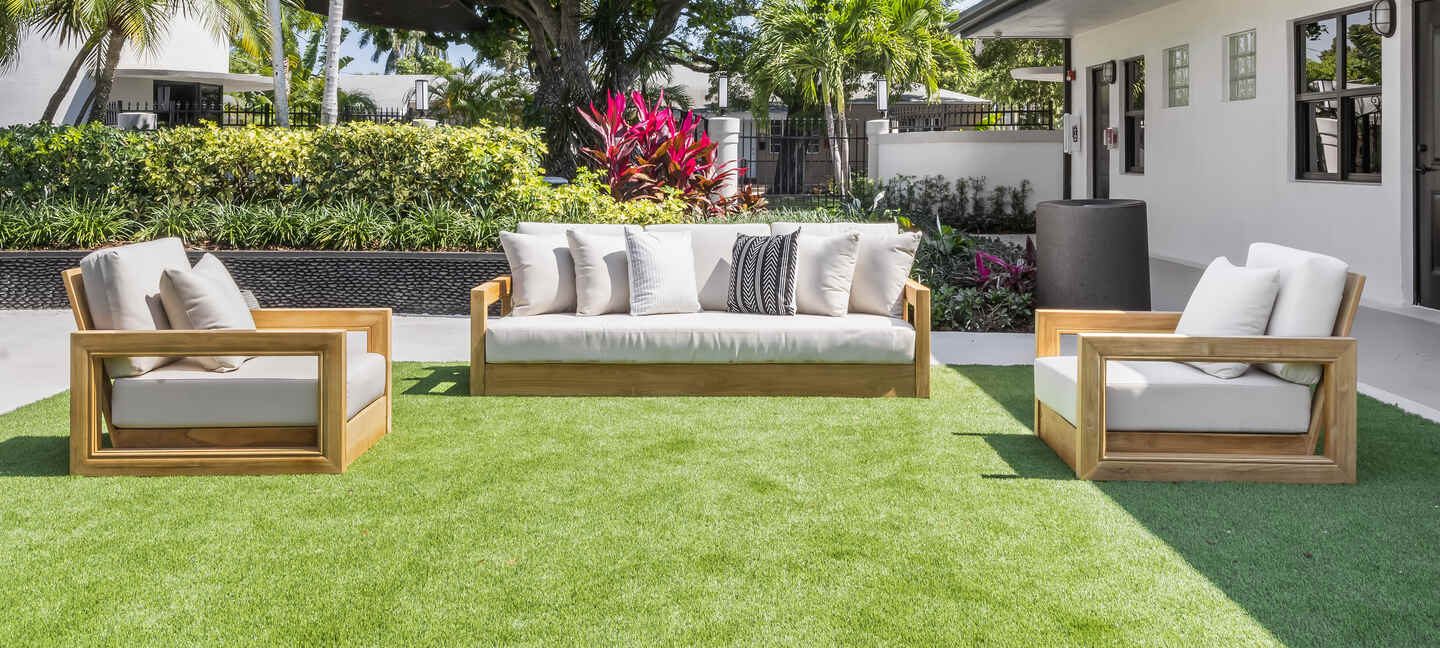
CBH’s residential program is located in Hollywood, Florida, in the heart of South Florida’s behavioral health corridor. The facility is set in a calm residential environment close to beaches, green spaces, and the amenities of the broader Hollywood and Fort Lauderdale area. The setting is intentionally designed to be neither clinical nor institutional. Recovery benefits from an environment that feels safe and human, not like a hospital.
Adults 18 and Over
CBH’s residential program serves adults aged 18 and over. The program is designed for the adult population and does not serve adolescents. Gender-specific groups and LGBTQIA+ affirming care are both available within the program.
Phone Policy
Clients in residential treatment are able to make up to three phone calls per week using facility phones. This policy is designed to balance the need for connection with family and loved ones against the need to be fully present in the treatment process. Case managers coordinate communication, so families stay informed throughout the residential stay.
Insurance
CBH is in-network with Aetna, Blue Cross Blue Shield, Cigna, Optum, Curative, TRICARE East, and the VA. Most commercial insurance plans cover residential mental health treatment under the federal mental health parity law. Call 844-503-0126, and our admissions team will verify your benefits at no cost before you make any decisions.
Why CBH for Residential Mental Health Treatment in South Florida
- 633 or more Google reviews across both South Florida locations
- 159% improvement in depression outcomes, 167% improvement in anxiety outcomes, 88% improvement in PTSD outcomes, all verified by Greenspace Health
- Mental health is treated as the primary diagnosis, not as a secondary complaint alongside addiction
- 29-bed residential program, intentionally small to produce individualized care that larger programs cannot deliver
- Caseloads of 8 to 10 clients per therapist, significantly below the industry norm
- Clinical Director knows every client by name
- Dr. Daud, board-certified in psychiatry and addiction psychiatry, oversees all evaluations and medication management
- GeneSight genetic testing for treatment-resistant presentations where prior medication trials have not worked
- Neurofeedback for nervous system dysregulation in PTSD, anxiety, and mood disorder presentations
- Canine Assisted Therapy twice per week as a clinical intervention, not a recreational add-on
- Full continuum from detox through IOP with the same clinical team at every level
- Joint Commission accredited, NAMI affiliated, AHCA, and DCF licensed
Frequently Asked Questions: Residential Mental Health Treatment in South Florida
What is residential mental health treatment?
Residential mental health treatment is a 24/7 structured treatment program where clients live at the facility and receive around-the-clock clinical support, psychiatric care, individual therapy, group therapy, and medication management. It is appropriate when the severity of mental health symptoms requires a level of clinical intensity and safety that outpatient care cannot provide. At CBH, residential treatment occurs at our 29-bed program in Hollywood, Florida, with caseloads held to 8 to 10 clients per therapist.
What mental health conditions are treated in residential programs in Florida?
CBH’s residential program treats depression, anxiety disorders, PTSD, OCD, bipolar disorder, schizophrenia, and psychotic spectrum disorders, attachment disorder, and any dual diagnosis combination of mental health and substance use disorders. All conditions are treated as primary diagnoses within a mental health-first clinical framework. Call 844-503-0126 to confirm whether your specific diagnosis is a fit for CBH’s residential program.
How long does residential mental health treatment last?
At CBH, length of stay is determined by clinical progress and not by an arbitrary 30-day standard. Residential stays typically range from 25 to 45 days, though complex presentations with co-occurring conditions or treatment-resistant histories may require longer engagement. Research consistently shows that longer treatment duration produces more durable outcomes. CBH does not discharge clients before they are clinically ready.
What is the difference between residential treatment and inpatient hospitalization?
Inpatient psychiatric hospitalization is a short-term acute stabilization setting, typically lasting three to seven days, focused on crisis management and safety. Residential treatment is a longer-term structured clinical program providing sustained psychiatric care, individual and group therapy, and skill development in a non-hospital setting. Residential treatment at CBH follows stabilization, whether from a hospital or from CBH’s own medical detox program, and provides the therapeutic depth that hospitalization cannot.
Does insurance cover residential mental health treatment in Florida?
Most commercial insurance plans cover residential mental health treatment under the federal mental health parity law. CBH is in-network with Aetna, Blue Cross Blue Shield, Cigna, Optum, Curative, TRICARE East, and the VA. Our admissions team verifies benefits at no cost before any decisions are made. Call 844-503-0126, and we will tell you exactly what your plan covers, what it does not, and what your out-of-pocket costs look like.
What makes a good residential mental health treatment center in South Florida?
The most important factors when evaluating residential mental health facilities in Florida are Joint Commission accreditation and state licensing, caseload size per therapist, whether the psychiatric team is present and board-certified, whether the program treats mental health as the primary diagnosis, and whether length of stay is driven by clinical progress. CBH meets all of these standards. It is Joint Commission accredited, AHCA and DCF licensed, maintains caseloads of 8 to 10 clients per therapist, and treats mental health as the foundational clinical identity of the program.
Can I use my VA benefits or TRICARE for residential mental health treatment?
Yes. CBH is an approved VA Community Care Network provider and accepts TRICARE East. Eligible veterans who have received VA authorization for community care may be able to receive residential treatment at CBH through their VA benefits. CBH’s admissions team provides direct support in navigating the VA authorization process. Call 844-503-0126, and our veteran admissions team will walk you through the options.
What is a South Florida residential rehab for mental health?
A residential rehab for mental health in South Florida is a licensed, structured residential treatment program that provides intensive psychiatric care, individual and group therapy, and 24/7 clinical support for adults with mental health conditions, with or without co-occurring substance use disorders. CBH’s residential program in Hollywood, Florida, is one of the few in South Florida that is built around a mental health-first clinical model with a dual diagnosis framework for co-occurring substance use.
Ready to Start? CBH’s 29-Bed Residential Program Has Availability Now.
If you or someone you love needs residential mental health treatment in South Florida, the decision of which program to trust matters. Not all residential mental health facilities in Florida are built the same. The clinical model, the caseload size, the specialization of the psychiatric team, and the foundational identity of the program as mental health-first or addiction-first all affect the outcome.
CBH’s 29-bed residential program in Hollywood, Florida, is built around the principle that mental health is the primary diagnosis and that durable recovery depends on treating the root, not just the symptoms. 159% depression improvement. 167% anxiety improvement. 88% PTSD improvement. Verified by an independent third-party research firm.
Call 844-503-0126 now. Available 24 hours a day, seven days a week. All calls are completely confidential. Insurance verified at no cost. Same-day admissions available in many cases. Stories change here.