























Mood Disorder Treatment in South Florida
Some South Florida days start heavy, then spiral fast: a burst of energy that flips to irritability, hours of numb scrolling, or a rush of ideas that keeps you up until dawn. Jobs, parenting, and relationships get harder when your internal weather shifts without warning. Mood disorders are medical conditions that change how the brain regulates energy, motivation, and emotion, and they are treatable with the right plan.
Effective care begins by stabilizing your nervous system and creating a daily structure you can actually follow. From there, targeted therapy, careful medication management, and skills practice help you reclaim steadier sleep, clearer thinking, and safer choices. Integrated support makes recovery more predictable and life more workable.

When a Mood Disorder Is Running Your Life
Intense mood shifts can crowd out everything you value, even when no one else notices. You might overdeliver at work for a week, then cancel everything the next, or feel calm at breakfast and panicked by dinner. Sleep, appetite, focus, and relationships take the hits first.
Common ways life gets hijacked include:
- Racing thoughts or slowed thinking that derail tasks
- Sudden irritability that damages trust at home
- Overspending or risky choices during energy spikes
- Withdrawing from friends, even when lonely
- Unpredictable sleep that wrecks next-day focus
Care starts with safety and stabilization so you can function again. Medical evaluation, trauma-informed therapy, and medication support are tailored by clinicians with intentionally small caseloads, which protects true individualization. Many patients begin with Individual therapy in South Florida to build skills that hold under stress.
Mood Disorders CBH Treats
Treatment addresses major depressive disorder, persistent depressive disorder, bipolar I and II, and cyclothymia. Some patients also experience depressive or mixed episodes linked with trauma histories, hormonal shifts, or medical conditions. Your diagnosis guides the interventions, not the other way around.
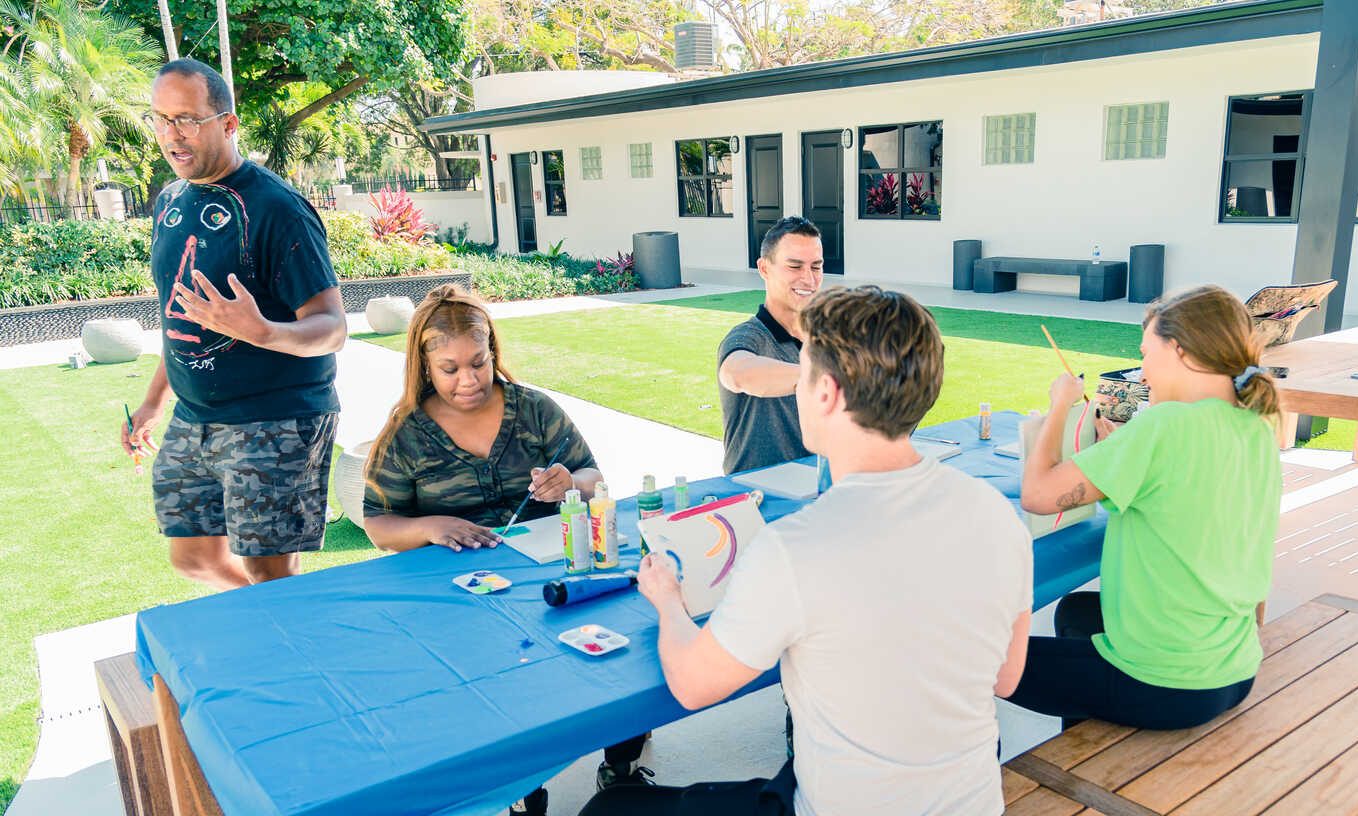
Care includes CBT, DBT, EMDR, neurofeedback, and Canine Assisted Therapy in residential, with art, music, and mobile fitness woven in to keep the work engaging. Medication management is coordinated with therapy, and GeneSight testing can inform complex decisions for high-acuity cases. Explore Depression treatment options in South Florida that pair skills practice with thoughtful medication support.
Veterans receive culturally competent care led by Spencer, a 21-year veteran who helps navigate VA benefits, and TRICARE East is accepted. Programming is LGBTQIA+ affirming, with dedicated Friday gender-specific groups to ensure psychological safety. Families are included as part of the treatment team through a structured support program.
Mood Disorders and Substance Use: The Loop Most Treatment Misses
Many people reach for alcohol, opioids, benzodiazepines, or stimulants to blunt despair or chase energy. Relief is short-lived, and withdrawal rebounds often amplify depression, anxiety, and irritability. Over time, the brain’s reward and stress circuits keep the loop running, even when substances make symptoms worse.
Integrated treatment interrupts this pattern by addressing mental health and substance use together, not in sequence. That can include medical detox, residential stabilization, and a PHP leveling system that builds empowerment rather than punishment; Level 3 adds family therapy, community passes, and full programming. See how Integrated rehab for co-occurring issues keeps one care team aligned across levels.
Lapses are met with curiosity and support instead of shame, because learning early warning signs is part of recovery. Patients can engage SMART Recovery and optional 12-Step resources without pressure. Consistent coaching helps you turn a lapse into renewed momentum.
Why Mood Disorders Are So Frequently Misdiagnosed
Symptoms overlap with anxiety, PTSD, ADHD, and trauma responses, so the presenting problem can mask the true pattern. Substance effects or withdrawal can mimic depression or hypomania, complicating first impressions. Antidepressants can also activate energy before lifting mood, which can be mistaken for bipolar changes or improvement.
Accurate diagnosis improves with time, not just one intake, which is why a full continuum and the same team across months matter. Clinicians use longitudinal observation, collateral from family when appropriate, and tools like GeneSight to refine medication choices. Learn more about differentiating patterns by Understanding bipolar spectrum symptoms in relation to past mood episodes.
Care is accredited by JCAHO, AHCA, DCF, and supported by NAMI and PsychArmor training for military competence. When appropriate, patients are referred to NeuroHealth in Fort Lauderdale for TMS or SPRAVATO evaluations. Stays are individualized based on clinical need and response.
Frequently Asked Questions About integrated mental health and substance care
Here are clear answers to common questions patients and families ask:
What signs suggest my mood is affecting daily functioning?
Watch for rapid swings in energy, motivation, or irritability that disrupt work, sleep, or relationships. If you are avoiding responsibilities or taking risks you later regret, it is time to get evaluated.
How does dual-diagnosis treatment address alcohol or drug use?
Medical providers manage withdrawal and safety while therapists target the thoughts, triggers, and skills that keep the cycle going. Both tracks move together so progress in one area supports the other.
Will I have the same care team across levels of care?
Yes, the same core clinicians follow you from higher to lower intensity. This continuity reduces retelling your story and speeds up individualized adjustments.
How are medications chosen if I have had side effects before?
Prescribers review your history, family response, and goals, and may use GeneSight testing in complex cases. Doses are adjusted gradually with close follow-up and symptom tracking.
Can my family be part of treatment and learn how to help?
Yes, family members are invited into structured education and therapy to improve communication and boundaries. Support continues through a dedicated curriculum and regular check-ins.
Do you accept TRICARE East and support veterans’ needs?
Yes, TRICARE East is accepted. Veteran services are led by a 21-year veteran who helps coordinate benefits and culturally competent care.
Key Takeaways on Mood Disorders
- Integrated care treats mental health and substance use together.
- Small caseloads support truly individualized treatment plans.
- Therapies include CBT, DBT, EMDR, and neurofeedback.
- GeneSight can guide complex medication decisions.
- Families are included as part of the care team.
Stability returns when your care plan addresses biology, skills, relationships, and environment in one coordinated arc. With compassionate structure and the right tools, change becomes sustainable.
If you are ready to stop cycling between good weeks and crashes, reach out to a team that treats mental health first and addresses substance use without shame. Visit Compassion Behavioral Health or call 844-503-0126 to talk through options in Hollywood and Fort Lauderdale. You will speak with people who know the local system and can help you navigate benefits. Your story can move in a healthier direction, starting today.
External Sources
- NCBI Bookshelf – Mood Disorders (StatPearls)
- National Institute of Mental Health – Any Mood Disorder: Statistics and prevalence
- PubMed – Comorbidity between mood and substance use disorders: Review
