


For many veterans, the hardest battles come long after leaving service. Trauma that was never fully processed can manifest as PTSD, depression, anxiety, and often a co-occurring substance use disorder. Eye Movement Desensitization and Reprocessing, known as EMDR, is an evidence-based therapy that helps the brain do what trauma prevented it from doing: process painful memories without being overwhelmed by them. Research published in peer-reviewed journals and endorsed by both the American Psychological Association and the World Health Organization consistently shows EMDR to be one of the most effective treatments available for PTSD. For veterans navigating this path, specialized veteran care at CBH includes EMDR as a core part of individualized treatment.
EMDR treatment for veterans is not a quick fix or a single-session solution. It is a structured, phased approach that addresses the root of trauma rather than simply managing symptoms. Studies indicate that up to 77% of combat veterans no longer meet the diagnostic criteria for PTSD after completing a full course of EMDR therapy. That kind of outcome is significant, and it reflects what clinicians who specialize in trauma have known for years: resolving the underlying wound changes everything, including the patterns of substance use that often grew around it.
Understanding how EMDR works, what to expect in sessions, and how to access it through VA benefits or TRICARE can remove barriers that keep veterans from starting. The information below is designed to help veterans and their families make clear, informed decisions about treatment.

What Is EMDR and Why Is It Effective for Veterans With PTSD and Trauma?
EMDR is a psychotherapy that uses bilateral stimulation, most commonly guided eye movements, to help the brain reprocess traumatic memories that remain stuck in a heightened emotional state. When trauma occurs, the brain can freeze a memory in raw, unprocessed form, meaning sights, sounds, smells, and emotions from that event continue to fire as though it is happening now. EMDR helps integrate those memories into the brain’s normal narrative system, reducing their emotional intensity without erasing them.
For veterans, this distinction matters. Combat trauma, military sexual trauma (MST), and moral injury do not simply fade with time. Without targeted intervention, they tend to drive hypervigilance, avoidance, sleep disruption, and, frequently, self-medication with alcohol or other substances. EMDR directly targets the neurological source of those responses rather than addressing symptoms in isolation.
The therapy follows eight defined phases, beginning with history-taking and stabilization before any trauma processing begins. This sequencing is intentional. Rushing into trauma reprocessing without proper preparation is one of the ways EMDR can go wrong, which is why working with a trained clinician in a structured setting matters enormously. Research on evidence-based PTSD treatment consistently confirms that the phased structure of EMDR is central to its safety and effectiveness.
How EMDR Fits Into CBH’s Dual-Diagnosis Treatment Model for Veterans
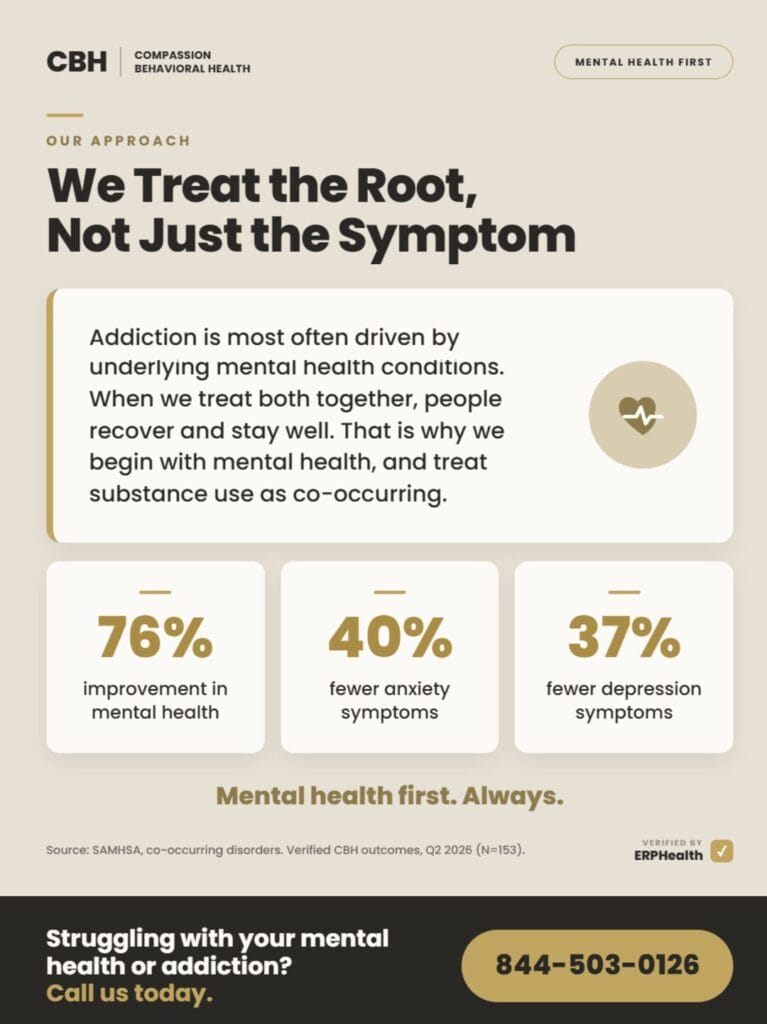
Compassion Behavioral Health treats mental health conditions and substance use disorders together, because in most veterans they are not separate problems. Trauma is frequently the engine behind both PTSD and substance use, and treating one without addressing the other leaves the most important work undone. EMDR fits naturally into this model because it targets the underlying trauma that so often drives self-medication and emotional dysregulation.
CBH holds PsychArmor certification, which reflects organizational competency in military culture and veteran-specific clinical needs. Spencer, CBH’s Director of Veteran Services, brings 21 years of service to that role. His presence is not symbolic: he actively helps veterans navigate the clinical process, understand their benefits, and feel genuinely understood by the people treating them.
EMDR at CBH is delivered within a broader individualized treatment plan that may also include CBT, DBT, neurofeedback, and group therapy. Therapist caseloads are intentionally kept small so that each person receives focused, consistent attention throughout their treatment. Veterans engaged in comprehensive mental health treatment in South Florida at CBH are not moving through a standardized protocol; their plan reflects their specific history, diagnosis, and goals.
What Our Customers Are Saying
What Veterans Can Expect During EMDR Therapy Sessions at CBH
EMDR sessions typically run between 50 and 90 minutes, and a full course of treatment generally involves 6 to 12 sessions delivered once or twice per week. Veterans with complex or combat-related PTSD may require more time than those processing a single-event trauma. Timelines at CBH are individualized, never predetermined, and the clinical team advocates for the time each person genuinely needs.
The first several sessions focus entirely on stabilization. Before any trauma memory is revisited, the therapist works with the veteran to build coping skills, establish a sense of safety, and assess readiness. This preparation phase is not optional, and at CBH it is given the clinical weight it deserves. Processing begins only when the treatment team and the veteran agree that the groundwork is solid.
It is normal to feel emotionally unsettled after sessions, particularly in the early processing phases. Some veterans experience vivid dreams, unexpected emotional surges, or temporary fatigue. These responses are a signal that the brain is actively integrating what it could not process before. CBH’s clinical team prepares veterans for this in advance and provides clear guidance on self-care between sessions, including the importance of rest, hydration, and avoiding major decisions in the 24 to 48 hours following a session. Veterans can learn more about the full range of available services through CBH’s mental health treatment services.
VA Coverage, Tricare, and Accessing EMDR Treatment for Veterans at CBH
The VA recognizes EMDR as an evidence-based treatment for PTSD and covers it at no additional cost for enrolled veterans. TRICARE also covers EMDR with in-network providers. If a local VA facility lacks availability, the VA may authorize a community care referral, allowing veterans to receive this treatment from a non-VA provider like CBH. Navigating that authorization process can feel daunting, which is why CBH handles benefits navigation directly.
CBH accepts both VA benefits and TRICARE East. The authorization process with the VA typically runs approximately two weeks, and CBH’s admissions team guides veterans and their families through every step. No one should lose access to trauma treatment because of paperwork. The following coverage pathways are available to veterans seeking care at CBH:
- VA benefits with community care referral authorization
- TRICARE East coverage with in-network verification
- Private insurance with benefits verification support
- Self-pay with individualized financial planning guidance
These options mean that cost and logistics are rarely the final barrier to getting started. The admissions team at CBH is trained to work through coverage questions with veterans before a commitment is made, so no one enters the process uninformed. To begin that conversation, the CBH admissions process is straightforward and confidential.
Frequently Asked Questions About EMDR Therapy for Veterans
Here are some of the most common questions veterans and their families ask about this topic:
-
Does the VA cover EMDR therapy for veterans?
Yes, the VA offers EMDR as a covered evidence-based treatment for PTSD at no additional cost to enrolled veterans. If local VA availability is limited, the VA may authorize a community care referral to an outside provider.
-
How many sessions does EMDR typically require for PTSD?
Most people complete between 6 and 12 sessions, delivered once or twice weekly, though complex or combat-related trauma may require additional time. Treatment timelines are always shaped by individual need and clinical progress, not a fixed schedule.
-
What is the success rate of EMDR for PTSD?
Research shows that 77% to 90% of people with single-event trauma no longer meet PTSD criteria after 3 to 6 sessions. One study found that 77% of combat veterans were PTSD-free after 12 sessions, which reflects strong outcomes even for complex presentations.
-
When is EMDR not recommended?
EMDR is generally not appropriate during active psychosis, severe unmanaged dissociation, active substance use without stabilization, or when ongoing trauma or crisis remains unresolved. A thorough clinical assessment determines readiness before processing begins.
-
Why do some people feel unsettled after EMDR sessions?
Emotional discomfort after a session, including fatigue, vivid dreams, or unexpected feelings, reflects the brain actively integrating traumatic material it has been holding. This is a recognized part of the healing process and typically decreases as treatment progresses.
-
Are EMDR results long-lasting?
Once a traumatic memory is fully reprocessed, it generally loses its emotional charge and does not return to its prior intensity. New traumas or complex PTSD presentations may call for additional sessions over time, but the gains from completed processing tend to hold.
Key Takeaways on EMDR Treatment for Veterans
- EMDR is an APA- and WHO-endorsed first-line therapy for PTSD with strong outcomes in veteran populations
- The VA and TRICARE both cover EMDR, including potential community care referrals for veterans
- CBH delivers EMDR within a dual-diagnosis model that treats trauma and co-occurring substance use together
- Sessions follow eight structured phases, beginning with stabilization before any trauma reprocessing occurs
- PsychArmor certification and veteran-specific staff make CBH clinically equipped to serve those who have served
Trauma does not resolve on its own, and the patterns it creates in daily life tend to deepen without targeted intervention. EMDR gives the brain a structured, evidence-based path toward processing what has been held in for too long.
Veterans in South Florida seeking individualized, trauma-focused care can find that path at Compassion Behavioral Health. To speak with someone about EMDR, VA benefits, or the admissions process, call 844-503-0126. The conversation is confidential, and there is no pressure to commit before you are ready.
External Sources
- Va.gov – Va.gov Resource
- Nih.gov – Traumatic Events and Post-Traumatic Stress Disorder (PTSD)
- Nih.gov – Sociodemographic Correlates of Affordable Community Behavioral Health Treatment Facility Availability in Florida: A Cross-Sectional Study


