

Alcohol cravings are not a sign of weakness. They are a neurological event: the brain, having adapted to the presence of alcohol, signals its expectation of more. Understanding what produces cravings and what reduces them is the starting point for managing them. This article covers what the research actually shows about foods that affect alcohol cravings, FDA-approved medications that reduce them, behavioral strategies that interrupt them, and what to do when they become unmanageable.
If you are reading this because alcohol cravings have been difficult to manage on your own, CBH’s South Florida clinical team is available at 844-503-0126. All calls are completely confidential.
Why Alcohol Cravings Happen
Alcohol produces its effects primarily through the GABA and glutamate neurotransmitter systems, enhancing GABA-mediated inhibition and suppressing glutamate-mediated excitation. With regular use, the brain compensates by reducing GABA sensitivity and increasing glutamate activity. When alcohol is removed, the result is a brain in a state of heightened excitation, producing anxiety, restlessness, irritability, and the intense urge to drink that constitutes an alcohol craving.
Dopamine plays a central role as well. Alcohol triggers dopamine release in the brain’s reward system, producing pleasure and reinforcing the drinking behavior. Over time, the brain’s baseline dopamine production decreases in response to the artificial dopamine elevation alcohol provides. The craving state is partly the brain seeking to restore the dopamine level it has come to expect. This is why alcohol cravings often feel physical, urgent, and disconnected from rational decision-making.
Cravings are also triggered by environmental cues, stress, negative emotional states, and exposure to people, places, and situations associated with past drinking. Understanding your personal craving triggers is as important as any dietary or pharmacological strategy for managing them.

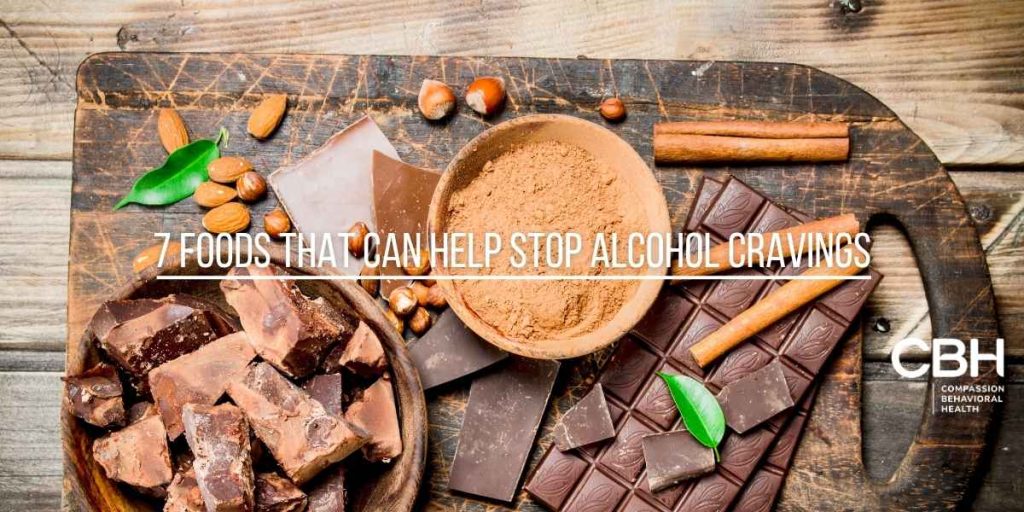
7 Foods That Can Help Stop Alcohol Cravings
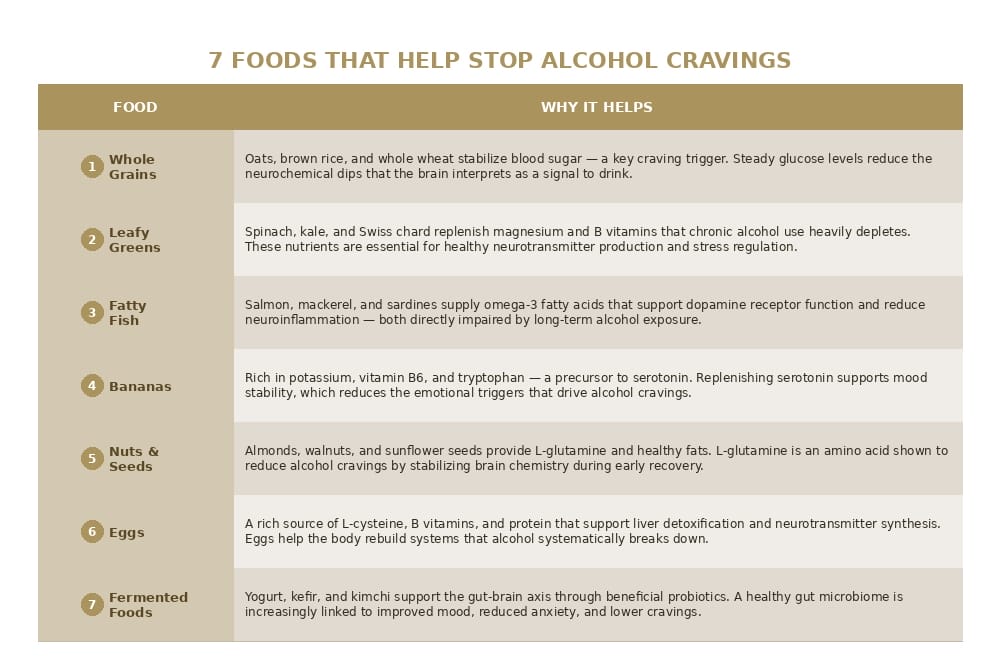
Certain foods affect the neurotransmitter systems involved in alcohol craving and can reduce their intensity. These are not cures for alcohol use disorder, but they are clinically meaningful supports that can make managing cravings easier, particularly in early recovery.
1. Foods High in Glutamine
L-glutamine is an amino acid that the brain converts to GABA, the inhibitory neurotransmitter that alcohol mimics. Some research suggests that supplementing glutamine can reduce alcohol cravings by supporting GABA production through a non-alcohol pathway. Foods high in glutamine include beef, chicken, fish, eggs, dairy products, spinach, parsley, and cabbage. Bone broth is a particularly concentrated source.
2. Complex Carbohydrates
Alcohol cravings are often intensified by low blood sugar, which is common in people who drink heavily because alcohol disrupts glucose metabolism and suppresses appetite. Complex carbohydrates, including oats, brown rice, sweet potatoes, legumes, and whole grain bread, provide sustained glucose release that stabilizes blood sugar and reduces the hypoglycemic states that can trigger or intensify alcohol cravings.
3. Foods Rich in B Vitamins
Chronic alcohol use depletes B vitamins, particularly thiamine (B1), folate (B9), and B12, which are essential for neurological function and neurotransmitter production. B vitamin deficiency contributes to anxiety, irritability, and fatigue that can intensify the pull toward drinking. Foods high in B vitamins include leafy greens, legumes, eggs, fortified cereals, lean meats, and nutritional yeast. Many people in early alcohol recovery benefit from B vitamin supplementation alongside dietary sources.
4. Foods High in Zinc
Zinc deficiency is common in people with heavy alcohol use and has been associated with increased alcohol craving intensity in some studies. Zinc plays a role in GABA receptor function and in the regulation of opioid receptors involved in alcohol’s reward effects. Foods high in zinc include oysters, beef, pumpkin seeds, chickpeas, lentils, and cashews.
5. Foods High in Magnesium
Alcohol depletes magnesium, which plays a role in glutamate regulation and GABA function. Low magnesium is associated with increased anxiety and neurological excitability, which can worsen the craving state. Foods high in magnesium include dark chocolate, avocados, nuts, seeds, legumes, leafy greens, and whole grains. Magnesium supplementation has some research support for reducing alcohol withdrawal-related anxiety and may support craving reduction.
6. Kudzu Root
Kudzu is an herb with a long history in traditional medicine for alcohol use, and it is one of the few herbal remedies with some clinical research support for reducing alcohol consumption. Several small studies have found that kudzu extract reduces the number of drinks consumed and may slow the rate of drinking. The proposed mechanism involves effects on alcohol metabolism and on serotonin and dopamine signaling. Kudzu is available as a supplement and is generally considered safe at recommended doses, though it should be discussed with a physician before use.
7. Foods That Support Dopamine Production
Because alcohol cravings are partly driven by dopamine-seeking behavior, supporting the brain’s own dopamine production through diet can reduce the neurological intensity of cravings. Foods that support dopamine synthesis include those high in tyrosine, the amino acid precursor to dopamine: chicken, turkey, fish, dairy products, eggs, nuts, seeds, legumes, and bananas. Regular physical exercise, which also boosts dopamine, is one of the most evidence-supported non-pharmacological strategies for alcohol craving reduction.
If cravings are occurring daily, are triggered by anxiety or depression that has never been properly treated, or are connected to a pattern of drinking that feels outside your control, food-based strategies alone may not be sufficient. CBH’s South Florida clinical team can help assess what level of support is right for your situation. Call 844-503-0126. All calls are completely confidential.
How to Curb Alcohol Cravings: Behavioral Strategies
Dietary changes address the neurological substrate of cravings. Behavioral strategies address the psychological and environmental dimensions. Both are necessary for comprehensive craving management.
Urge Surfing
Urge surfing is a mindfulness-based technique that involves observing an alcohol craving without acting on it, recognizing that cravings are time-limited events that peak and subside, usually within 15 to 30 minutes. Instead of fighting the craving or complying with it, the person watches it the way a surfer watches a wave: it rises, it peaks, it passes. Research supports urge surfing as an effective strategy for reducing craving-driven drinking behavior.
Stimulus Control
Stimulus control involves identifying and reducing exposure to the environmental cues that trigger alcohol cravings. Common triggers include specific locations (bars, home after work), times of day, social situations, emotional states (stress, boredom, loneliness), and other people who drink. Reducing exposure to high-risk triggers, particularly in early recovery, reduces craving frequency and intensity.
Physical Exercise
Exercise is one of the most consistently evidence-supported strategies for alcohol craving reduction. Aerobic exercise in particular produces endorphin and dopamine release that addresses some of the neurological deficit states that cravings represent. Research shows that even a single exercise session can reduce alcohol craving intensity and duration. Regular exercise also improves sleep, reduces anxiety, and addresses the depression that often underlies alcohol use disorder.
Delay and Distraction
Because most cravings peak and subside within 15 to 30 minutes, delay strategies, committing to wait a specific period before acting on a craving, are effective for many people. Combining delay with distraction, engaging in an activity that occupies attention during the waiting period, reduces the probability that a craving will result in drinking. Effective distraction activities vary by person: exercise, calling a friend, a specific task, or any engaging activity that redirects attention.
Keeping a Craving Journal
Tracking cravings, including when they occur, what preceded them, how intense they were, and what happened, provides data for identifying personal craving patterns. This information is also valuable clinical material for therapy, helping identify triggers that can be addressed in treatment.
Drugs to Reduce Alcohol Cravings: FDA-Approved Medications
Several FDA-approved medications have strong evidence for reducing alcohol cravings and supporting sustained abstinence. These are not last resorts. They are first-line clinical tools that significantly improve treatment outcomes when combined with counseling and behavioral therapy.
Naltrexone (Vivitrol, ReVia)
Naltrexone is an opioid receptor antagonist that blocks the euphoric and reinforcing effects of alcohol. When alcohol is consumed in the presence of naltrexone, it produces significantly less reward, reducing the craving reinforcement cycle over time. Research consistently shows naltrexone reduces the number of heavy drinking days, reduces relapse rates, and reduces alcohol cravings directly. Vivitrol is the extended-release injectable form that provides a full month of craving reduction from a single injection, eliminating daily medication adherence challenges. ReVia is the daily oral tablet form.
Naltrexone is one of the most evidence-supported pharmacological treatments for alcohol use disorder available and is prescribed by Dr. Daud at CBH as part of the comprehensive dual-diagnosis treatment plan when clinically indicated.
Alcohol Patches: Transdermal Naltrexone
Transdermal naltrexone patches deliver naltrexone through the skin continuously, providing a steady blood level without daily oral administration. While transdermal naltrexone patches are less widely available than oral or injectable forms, research on their efficacy is promising. They offer an alternative delivery method for patients who prefer not to take daily pills or receive monthly injections. If you are searching specifically for alcohol patches as a craving reduction tool, transdermal naltrexone is the most clinically relevant product in this category. Availability and prescription requirements vary; a physician consultation is required.
Acamprosate (Campral)
Acamprosate works through a different mechanism than naltrexone, modulating the glutamate system to reduce the neurological hyperexcitability that produces post-acute withdrawal symptoms including anxiety, restlessness, and alcohol cravings in people who have achieved abstinence. Research shows acamprosate is most effective for people who have already stopped drinking and want to maintain abstinence, reducing the protracted withdrawal symptoms that drive relapse in the weeks and months after acute detoxification.
Disulfiram (Antabuse)
Disulfiram works by blocking the enzyme that breaks down acetaldehyde, a toxic byproduct of alcohol metabolism. When someone taking disulfiram drinks alcohol, they experience an extremely unpleasant reaction including flushing, nausea, vomiting, headache, and elevated heart rate. This aversive reaction creates a pharmacological deterrent to drinking. Disulfiram does not reduce cravings directly but reduces drinking by making the consequences of drinking immediately and intensely unpleasant.
Gabapentin and Baclofen
Gabapentin and baclofen are not FDA-approved specifically for alcohol use disorder but are used off-label by some physicians for alcohol craving reduction, particularly in the context of post-acute withdrawal symptoms. Both affect the GABA and glutamate systems involved in alcohol craving. Research support is more limited than for naltrexone and acamprosate, but both are used in clinical practice for specific presentations.
If you are interested in FDA-approved medications to reduce alcohol cravings, a physician evaluation is required. At CBH in South Florida, Dr. Daud provides medication management for alcohol use disorder as part of the comprehensive dual-diagnosis treatment program. Call 844-503-0126 to discuss whether medication-assisted treatment is right for your situation.
How to Stop Drinking Alcohol: Home Remedies and Supplements
Beyond foods and FDA-approved medications, several supplements and home-based strategies have some evidence for reducing alcohol cravings. These are most effective as complements to professional treatment rather than standalone interventions for significant alcohol use disorder.
N-Acetyl Cysteine (NAC)
NAC is a supplement that supports glutathione production and modulates the glutamate system involved in addiction craving states. Several studies have examined NAC for reducing cravings across multiple substance use disorders, including alcohol. The evidence is preliminary but promising. NAC is widely available as a supplement and is generally considered safe at recommended doses.
Milk Thistle
Milk thistle contains silymarin, a compound with hepatoprotective properties that may support liver function in people with alcohol-related liver damage. While milk thistle does not directly reduce alcohol cravings, supporting liver health reduces some of the physical consequences of heavy alcohol use that can indirectly maintain the drinking pattern.
Adequate Sleep
Sleep deprivation significantly worsens alcohol craving intensity. The relationship between alcohol use and sleep disruption is bidirectional: heavy alcohol use disrupts sleep architecture, and poor sleep increases the pull toward alcohol as a sleep aid. Prioritizing sleep hygiene, including consistent sleep and wake times, reducing screen time before bed, and addressing the anxiety or insomnia that often co-occurs with alcohol use disorder, can meaningfully reduce daytime craving intensity.
Hydration
Dehydration is common in people who drink heavily and can produce symptoms, including fatigue, headache, and irritability, that are mistaken for or that intensify alcohol cravings. Adequate hydration, aiming for at least eight glasses of water per day, supports the physical baseline from which cravings are more manageable.
How to Fight Alcohol Cravings After Surviving Withdrawal
Managing alcohol cravings after getting through the acute withdrawal phase is a distinct clinical challenge from managing cravings while still drinking. Post-acute withdrawal syndrome (PAWS) can produce alcohol cravings, anxiety, depression, sleep disruption, and cognitive fog for weeks to months after detoxification, even when the acute physical withdrawal has resolved.
The cravings of PAWS are neurologically driven by the brain’s slow recovery from the adaptations produced by prolonged alcohol use. The GABA and glutamate systems that were disrupted by chronic alcohol use take time to recalibrate. During this recalibration period, cravings can emerge suddenly, feel intense, and be triggered by seemingly minor stressors.
What Helps Most After Withdrawal
- Structured daily routine: the absence of structure is one of the strongest predictors of craving episodes and relapse in early recovery. Building a consistent daily schedule of sleep, meals, exercise, and purposeful activity reduces the window in which cravings can dominate attention
- Ongoing therapy: individual therapy with a clinician trained in cognitive behavioral therapy for alcohol use disorder addresses the cognitive patterns, emotional states, and environmental triggers that drive post-withdrawal cravings
- Medication: naltrexone and acamprosate are most effective precisely in the post-withdrawal period, when the goal is maintaining abstinence rather than managing acute withdrawal
- Peer support: connection with others who understand the post-withdrawal craving experience reduces the isolation that intensifies cravings and provides accountability
- Addressing underlying mental health conditions: the depression, anxiety, and PTSD that often co-occurred with the alcohol use do not resolve with sobriety alone and typically worsen the craving experience if left untreated
If you have been through detox or withdrawal and are managing cravings at home without additional clinical support, CBH’s outpatient programs in Fort Lauderdale provide structured support for exactly this phase of recovery. PHP and IOP are designed for adults who have achieved initial stability and need ongoing clinical structure to protect and build on it.
Getting through withdrawal is a significant accomplishment. Staying sober after withdrawal requires a different kind of support than getting through the withdrawal itself. If cravings after withdrawal have been difficult to manage alone, CBH’s Fort Lauderdale outpatient programs can help. Call 844-503-0126. All calls are completely confidential.
When Alcohol Cravings Signal Something More
Alcohol cravings that occur daily, that feel impossible to resist, that are triggered by anxiety or depression rather than just environmental cues, or that have led to multiple attempts to cut back that have not worked are not simply a willpower problem. They are clinical signals that the alcohol use has developed a neurological and often a mental health dimension that food strategies and home remedies alone are unlikely to resolve.
CBH was founded on the clinical observation that alcohol use is almost always driven by an underlying mental health condition that was never properly treated. Depression, anxiety, PTSD, bipolar disorder, and ADHD are the most common co-occurring conditions in people with alcohol use disorder. The alcohol relieves the symptoms of the mental health condition temporarily. Removing the alcohol without treating the mental health condition leaves the driver of the use in place.
At CBH in South Florida, alcohol addiction treatment addresses the depression, anxiety, PTSD, or other mental health condition driving the alcohol use alongside the alcohol use disorder simultaneously, from the first day of admission. Medical detox in Hollywood manages withdrawal safely. Residential treatment, PHP, and IOP address the underlying conditions and build the skills and support system that sustain recovery after treatment ends.
- 159% improvement in depression outcomes, verified by Greenspace Health
- 167% improvement in anxiety outcomes, verified by Greenspace Health
- 88% improvement in PTSD outcomes, verified by Greenspace Health
- Medical detox in Hollywood, FL with 24/7 physician oversight
- Residential treatment, PHP, and IOP in South Florida
- Dr. Daud, board-certified in psychiatry and addiction psychiatry
- In-network with Aetna, Blue Cross Blue Shield, Cigna, Optum, TRICARE East, and the VA

If Alcohol Cravings Have Become More Than You Can Manage
Managing alcohol cravings with food, supplements, and behavioral strategies works for many people at earlier stages of problematic drinking. If those strategies are not enough, that is not a personal failure. It is clinical information. It means the alcohol use has developed a neurological dimension that requires professional support.
CBH’s South Florida team treats alcohol use disorder within a dual-diagnosis model that identifies and addresses the depression, anxiety, PTSD, or other mental health condition driving the drinking alongside the alcohol use disorder itself. Medical detox in Hollywood. Residential treatment. PHP and IOP in Fort Lauderdale. The same clinical team at every level. Outcomes verified by independent research.
Call 844-503-0126 now. Available 24 hours a day, seven days a week. All calls are completely confidential. There is no obligation. Stories change here.
Alcohol Cravings Q&A
How do I stop alcohol cravings instantly?
The fastest ways to interrupt an alcohol craving are to eat a protein-rich snack or piece of fruit to stabilise blood sugar, drink a large glass of cold water, and physically change your environment; moving to a different room or stepping outside breaks the sensory cue driving the craving. Cravings typically peak within 5–10 minutes and pass within 20–30 minutes if not acted on. Deep breathing or a brief burst of physical activity, even a 5-minute walk, is clinically shown to reduce craving intensity more rapidly than passive distraction.
How do I stop drinking alcohol at home without medication?
Stopping alcohol at home without medication is possible for light to moderate drinkers, but heavy or long-term dependent drinkers should always seek medical supervision first, as withdrawal can be dangerous. For those who are medically safe to reduce at home, effective strategies include removing alcohol from the home entirely, replacing drinking rituals with structured alternatives, eating regular meals to stabilise blood sugar, using supplements such as B vitamins and magnesium to support the body, and joining an online support group or using an app-based sobriety programme. Professional support significantly improves long-term success rates even when physical detox is managed at home.
What are the best home remedies to stop alcohol cravings?
The most effective home remedies for reducing alcohol cravings are those that address the underlying drivers, blood sugar instability, nutrient depletion, and stress. Eating foods high in L-glutamine (spinach, cabbage, eggs), taking magnesium and B-complex supplements, drinking herbal teas such as chamomile or valerian at times you would normally drink, regular aerobic exercise, and cold water exposure have all shown benefit. Kudzu root extract is one of the most clinically studied natural remedies and has been shown in trials to reduce alcohol consumption in heavy drinkers.
Why do I crave alcohol?
Alcohol cravings are primarily driven by changes in dopamine and GABA pathways in the brain that develop with repeated use. Alcohol increases dopamine, the reward chemical, and enhances GABA, the calming neurotransmitter, making the brain associate drinking with both pleasure and stress relief. Over time, the brain reduces its own production of these chemicals to compensate, meaning that in the absence of alcohol, dopamine drops and anxiety rises, triggering a craving. Environmental cues, stress, blood sugar dips, and habit-formed associations with specific times or places also play a strong role.
Why do I crave alcohol when I am not an alcoholic?
You do not need to be dependent on alcohol to experience cravings. Occasional or social drinkers can develop habitual associations between certain situations, stress, socialising, finishing work, watching sport, and the act of drinking. The brain’s reward system encodes these associations over time, and when the context arises without alcohol, the brain registers a mild deficit. Blood sugar dips, dehydration, and anxiety can also mimic or amplify alcohol cravings in people who drink only occasionally.
How do I stop craving alcohol in the evening?
Evening alcohol cravings are often the strongest because they coincide with the end of a stressful day, a habitual drinking time, and a natural dip in blood sugar after the evening meal. The most effective strategies are eating a protein-rich dinner to sustain blood sugar, replacing the drinking ritual with a specific alternative (herbal tea, sparkling water with citrus, or a non-alcoholic aperitif), exercising in the late afternoon to burn off cortisol, and structuring the first hour of the evening with an activity that occupies both hands and attention, cooking, a hobby, or a phone call.
How do I manage alcohol cravings without drinking?
Managing alcohol cravings without drinking involves both in-the-moment techniques and longer-term lifestyle strategies. In the moment: urge surfing (observing the craving without acting on it), distraction through physical movement, and eating or drinking something non-alcoholic. Over time: identifying and avoiding or managing specific triggers, building a regular eating schedule to prevent blood sugar dips, exercising regularly to restore dopamine balance, and working with a therapist or support programme to address the emotional drivers of cravings. Medication such as naltrexone can also significantly reduce craving intensity and is worth discussing with a doctor.
What can I drink instead of alcohol to stop cravings?
The most effective non-alcoholic alternatives for managing cravings are drinks that either replicate the sensory ritual of drinking or address the physiological driver of the craving. Sparkling water with citrus and a splash of bitters closely mimics the experience of a gin and tonic. Kombucha provides a fermented, slightly effervescent alternative with gut health benefits. Herbal teas, particularly chamomile, valerian, or passionflower, help with anxiety-driven evening cravings. Electrolyte drinks address the dehydration that often underlies cravings. Non-alcoholic spirits and beers have also improved significantly and can satisfy the sensory habit without the alcohol content.’
What supplements reduce alcohol cravings?
The supplements with the most evidence for reducing alcohol cravings are l-glutamine (which stabilises blood sugar and supports GABA production), magnesium glycinate (which eases anxiety and improves sleep), B-complex vitamins (which are heavily depleted by alcohol use and support neurotransmitter function), NAC (N-acetyl cysteine, which regulates glutamate signalling disrupted by chronic alcohol use), and GABA or theanine (which support the calming neurotransmitter system alcohol hijacks). Always consult a healthcare provider before combining supplements, particularly if already taking medication for alcohol use disorder.
How do I stop alcohol cravings naturally?
Natural strategies for reducing alcohol cravings work by addressing the neurochemical and physiological imbalances that drive them. Regular aerobic exercise is one of the most powerful; it raises dopamine, serotonin, and endorphins, restoring the chemical balance disrupted by alcohol. A diet focused on protein, complex carbohydrates, and magnesium-rich foods stabilises blood sugar and supports GABA. Mindfulness and urge surfing practices reduce the psychological pull of cravings over time. Herbal supplements such as kudzu root and ashwagandha have supporting evidence. Together, these approaches address the root causes rather than just the symptoms.
How do I stop the urge to drink alcohol?
Urges to drink alcohol are time-limited; they peak within minutes and pass within 20 to 30 minutes if not acted on. In the moment, the most effective techniques are the HALT check (are you Hungry, Angry, Lonely, or Tired, the four most common urge triggers), physical movement to change your body state, calling someone or engaging socially, and drinking something immediately to occupy the oral habit. Longer term, reducing exposure to environmental cues, building alternative stress-management routines, and addressing underlying anxiety or depression are the most effective ways to reduce both the frequency and intensity of urges.
How do I stop drinking alcohol when I use it to cope with stress?
When alcohol has become a primary coping mechanism for stress, stopping cravings requires building replacement coping strategies before removing alcohol; the stress remains without any outlet. Effective replacements include exercise (which reduces cortisol more effectively than alcohol), progressive muscle relaxation or breathing techniques, therapy (particularly CBT and ACT, which target stress-response patterns), and structured social support. Addressing the source of the stress, whether work, relationships, or financial pressure, is equally important alongside the behavioural changes.
What foods reduce alcohol cravings specifically?
Foods that most directly reduce alcohol cravings do so by stabilising blood sugar and replenishing neurotransmitter building blocks. The most effective are: eggs (rich in tyrosine and choline, which support dopamine and acetylcholine production), oats (slow-release carbohydrates that prevent blood sugar crashes), spinach and cabbage (high in l-glutamine, which reduces craving intensity), bananas (rich in B6 and tryptophan, which support serotonin production), and nuts and seeds (high in magnesium, which supports GABA and reduces anxiety). Eating these regularly throughout the day rather than in a single meal provides more sustained craving relief.
How do I stop craving alcohol after quitting?
Cravings after quitting alcohol are normal and typically most intense in the first two to four weeks before gradually reducing. The most effective ways to manage them are maintaining a regular eating schedule (blood sugar dips are a major craving trigger), staying well hydrated, exercising daily to restore dopamine balance, keeping a craving diary to identify patterns and triggers, and having a prepared plan for high-risk moments such as social events or stressful evenings. If cravings remain severe beyond 4–6 weeks, speaking with a doctor about medication such as naltrexone or acamprosate is strongly recommended.
What is the best natural suppressant for alcohol cravings?
The natural approach with the strongest clinical evidence for suppressing alcohol cravings is a combination of L-glutamine supplementation and regular aerobic exercise, addressing both the physiological and neurochemical drivers of cravings simultaneously. Kudzu root extract has shown promise in clinical trials for reducing the number of drinks consumed per session. Magnesium supplementation addresses the GABA deficiency that underlies anxiety-driven cravings. No single natural supplement is as effective as FDA-approved medications like naltrexone, but these approaches can significantly reduce craving frequency when used consistently as part of a broader recovery plan.
How do I reduce alcohol cravings with diet?
Diet reduces alcohol cravings primarily through blood sugar stabilisation and neurotransmitter support. Eating three meals a day with adequate protein (at least 20–30g per meal) prevents the glucose crashes that the brain interprets as a signal to seek alcohol. Including magnesium-rich foods (leafy greens, pumpkin seeds, dark chocolate) supports GABA. Foods high in tryptophan (turkey, eggs, dairy, oats) support serotonin production, which reduces anxiety-driven cravings. Avoiding high-sugar and high-caffeine foods is equally important — both cause the blood sugar volatility and anxiety spikes that trigger cravings.
How do I stop drinking alcohol, home remedies that actually work?
Home remedies with genuine evidence behind them for reducing alcohol consumption include kudzu root extract (clinically shown to reduce drinks per session), L-glutamine (reduces craving intensity by stabilising blood sugar and supporting GABA), regular exercise (restores dopamine balance disrupted by alcohol), and dietary changes that eliminate blood sugar volatility. Behavioural approaches such as urge surfing, stimulus control (removing alcohol from the home and avoiding high-risk environments), and accountability structures (journaling, apps, or support groups) have strong evidence from addiction research. Remedies with no reliable evidence include most commercial detox products, herbal teas marketed as addiction cures, and aversion home techniques.
What to drink to stop alcohol cravings immediately?
The fastest-acting drinks for reducing an alcohol craving are cold sparkling water (the carbonation and temperature provide an immediate sensory interruption), a fruit juice or sweet drink (addresses blood sugar dips which often underlie cravings), or a strong herbal tea such as peppermint or ginger (the intense flavour competes with the craving signal). Drinks containing L-theanine, such as green tea, can reduce anxiety within 30 to 45 minutes. Electrolyte drinks help when dehydration is the underlying trigger. The act of making and drinking something warm or fizzy also partially satisfies the behavioural ritual of drinking.
How do I cope with alcohol cravings in social situations?
Social situations are one of the most powerful craving triggers because they combine environmental cues, peer behaviour, and reduced inhibition. Effective strategies include arriving with a plan, knowing in advance what non-alcoholic drink you will order, bringing a trusted sober companion, having an exit strategy for high-pressure moments, and practising a short, confident response to offers of alcohol. Rehearsing refusal in advance reduces the cognitive load in the moment. If a social event feels too high-risk early in recovery, it is entirely reasonable to decline and suggest an alternative activity.
Why do I crave alcohol every day?
Daily alcohol cravings indicate that the brain has formed a strong neurochemical dependency on alcohol, either through physical dependence (where GABA and dopamine systems have fundamentally adapted to alcohol’s presence) or through deeply entrenched habit loops that trigger craving at the same times each day. Daily cravings that feel compulsive or are accompanied by anxiety or physical discomfort when not drinking are signs that professional support is needed. Speaking with a doctor about medication-assisted treatment, which significantly reduces craving frequency and intensity, is strongly recommended at this level of craving.
What to do when craving alcohol at night?
When a nighttime alcohol craving strikes, the most effective immediate actions are eating a small protein and carbohydrate snack to address any blood sugar drop, making a warm non-alcoholic drink to replace the ritual, and removing yourself from the room or context where you would normally drink. If the craving feels intense, urge surfing, sitting with the craving without acting on it, and observing it as a physical sensation rather than a command, typically reduces its intensity within 10 to 15 minutes. Having a prepared craving plan for nighttime is more effective than trying to make decisions in the moment when willpower is lowest.
How do I stop alcohol cravings when they are triggered by stress?
Stress-triggered alcohol cravings are driven by alcohol’s ability to temporarily reduce cortisol and enhance GABA, creating a learned association between stress relief and drinking. Breaking this association requires building alternative stress-response habits that activate the same neurochemical pathways: vigorous exercise (most effective), cold water immersion, progressive muscle relaxation, or any high-engagement physical activity. In the moment, box breathing (4 counts in, 4 hold, 4 out, 4 hold) activates the parasympathetic nervous system and reduces cortisol within minutes, providing a faster stress-relief response than most other non-pharmacological techniques.
How long does it take for alcohol cravings to stop after quitting?
For most people, alcohol cravings peak in intensity during the first one to two weeks after stopping, then gradually reduce over the following weeks and months. By three months of sobriety, the majority of people report cravings that are noticeably less frequent and less intense. For heavy long-term drinkers, significant cravings can persist for six to twelve months, and low-level situational cravings can resurface for years when triggered by stress or environmental cues. With medication, therapy, and lifestyle strategies, most people reach a point where cravings are manageable and infrequent within 90 days.
How do I stop alcohol cravings?
Stopping alcohol cravings involves multiple strategies depending on their severity. Dietary approaches include foods high in glutamine, complex carbohydrates for blood sugar stability, and foods rich in B vitamins, zinc, and magnesium that alcohol depletes. Behavioral strategies include urge surfing, exercise, delay and distraction, and stimulus control. FDA-approved medications including naltrexone, acamprosate, and disulfiram significantly reduce craving intensity and frequency when prescribed by a physician as part of a treatment plan. For cravings driven by underlying anxiety, depression, or PTSD, treating the mental health condition directly is often the most effective approach.
What drugs reduce alcohol cravings?
The FDA-approved medications for reducing alcohol cravings are naltrexone (available as Vivitrol injection or ReVia tablets), acamprosate (Campral), and disulfiram (Antabuse). Naltrexone blocks the reward effects of alcohol, reducing the craving reinforcement cycle. Acamprosate reduces post-withdrawal neurological hyperexcitability that drives cravings in people who have stopped drinking. Disulfiram creates an aversive reaction to alcohol consumption, reducing drinking through a deterrent mechanism. These medications require a physician prescription and are most effective when combined with counseling.
What are alcohol patches?
Alcohol patches refer to transdermal naltrexone patches that deliver naltrexone through the skin continuously, providing a steady blood level for craving reduction without daily oral medication. Transdermal naltrexone is less widely available than injectable Vivitrol or oral ReVia but is an alternative delivery method for patients who prefer transdermal administration. A physician consultation and prescription are required. Ask a prescribing physician or CBH’s clinical team at 844-503-0126 about naltrexone patch availability.
How do I stop alcohol cravings at home?
Home strategies for stopping alcohol cravings include eating regularly to stabilize blood sugar with complex carbohydrates, consuming foods high in glutamine, B vitamins, zinc, and magnesium that support neurotransmitter production, staying well hydrated, exercising regularly, practicing urge surfing (observing cravings without acting on them until they pass), reducing exposure to craving triggers, and ensuring adequate sleep. Kudzu root and N-Acetyl Cysteine supplements have some research support. For significant or daily cravings, a physician consultation about FDA-approved medication options is recommended.
How do I fight alcohol cravings after withdrawal?
Post-withdrawal alcohol cravings are driven by post-acute withdrawal syndrome (PAWS), the brain’s slow recalibration of GABA and glutamate systems after prolonged alcohol use. Strategies that help most include building a structured daily routine, engaging in regular aerobic exercise, attending ongoing individual therapy or a structured outpatient program, considering FDA-approved medications like acamprosate that are specifically effective in the post-withdrawal period, and addressing co-occurring mental health conditions like anxiety, depression, or PTSD that intensify post-withdrawal cravings. CBH’s Fort Lauderdale PHP and IOP programs are designed specifically for this phase of recovery.
Can food stop alcohol cravings?
Food alone cannot stop alcohol cravings, but specific dietary choices can reduce their intensity. Foods that support GABA production (high-glutamine foods), stabilize blood sugar (complex carbohydrates), replenish depleted nutrients (B vitamins, zinc, magnesium), and support dopamine production (tyrosine-rich foods) all address nutritional dimensions of the craving state. For moderate to severe alcohol cravings, dietary strategies are most effective as complements to behavioral strategies and, when appropriate, FDA-approved medication.
How do I curb alcohol cravings immediately?
Strategies to curb an alcohol craving in the moment include urge surfing (observing the craving without acting on it, knowing it will peak and subside within 15 to 30 minutes), eating a snack high in complex carbohydrates or protein to stabilize blood sugar, exercising, calling someone you trust, drinking water, and engaging in a distracting activity. Cold water exposure can reduce acute craving intensity for some people. If immediate cravings are occurring daily or feel unmanageable, a physician consultation about naltrexone or other FDA-approved options is strongly recommended.


