
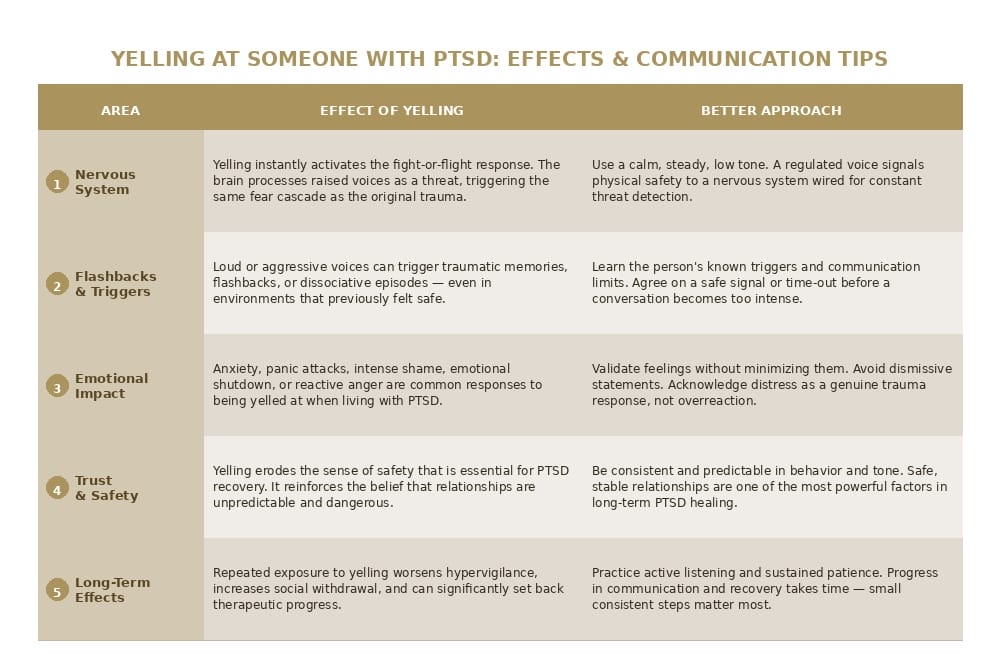
Many people are never taught what happens inside the body of someone with PTSD when a voice is raised. The response is not an overreaction, a personality flaw, or an attempt to avoid conflict. It is a neurological event. The brain of someone who has experienced trauma does not process raised voices the way other brains do. When yelling enters the environment, the threat-detection system fires, the nervous system mobilizes, and the person is, on a biological level, back inside their trauma.
This article covers the psychological and physiological effects of yelling on someone with PTSD, why those responses occur, what they look like in real interactions, and how to communicate more effectively with someone whose nervous system has been shaped by trauma.
What Happens in the Brain When Someone with PTSD Hears Yelling
The brain’s fear center, the amygdala, functions as a continuous threat scanner. In people without trauma histories, the amygdala processes most stimuli as non-threatening and defers to the prefrontal cortex, the part of the brain responsible for reasoning and judgment. In someone with PTSD, the amygdala has been recalibrated by trauma. It is more sensitive, fires more quickly, and is harder to override.
When yelling enters the environment, the traumatized amygdala treats it as confirmation of danger. The prefrontal cortex is effectively bypassed. Stress hormones flood the system. Heart rate accelerates. Muscles tighten. Breathing changes. The person enters a fight, flight, or freeze state before conscious thought has a chance to assess what is actually happening. This is not a choice. It is the nervous system doing what it was conditioned to do by prior experience.
For someone with PTSD, this response is not proportional to the current situation. It is proportional to what the nervous system learned from the past.
The Trauma Response to Being Yelled At
The trauma response to being yelled at varies by person, but several patterns are common among individuals with PTSD. Understanding these responses helps explain behavior that can otherwise appear confusing or extreme to someone who does not share the same history.
Freeze and Dissociation
Some individuals with PTSD go completely still when yelled at. They may become unresponsive, stop making eye contact, or seem mentally absent from the conversation. This freeze response is a survival mechanism, the same one that causes animals to go still in the presence of a predator. Dissociation can accompany this response, where the person disconnects from the immediate moment as a protective measure.
Flight and Avoidance
Others will physically remove themselves from the situation or emotionally withdraw. Someone who repeatedly leaves rooms when voices are raised, who avoids certain people or environments, or who becomes difficult to reach after a conflict may be managing a conditioned flight response. Over time, this avoidance can become generalized, extending beyond yelling to any situation that feels potentially confrontational.
Fight and Reactive Anger
A smaller portion of people with PTSD respond to yelling with intense reactive anger. The threat signal triggers an aggressive defense response. This can look like an argument escalating suddenly and sharply, the person saying things they later cannot fully account for, or emotional intensity that seems disproportionate to what sparked it. This reactive pattern is particularly common in individuals whose original trauma involved a situation where they were unable to defend themselves.
Why People Cry When Someone Yells at Them
Crying when yelled at is one of the most common trauma responses, and it often carries significant shame for the person experiencing it. Many people describe desperately not wanting to cry but being unable to stop. The tears are not a tactic or a manipulation. They are a physiological release of the stress hormones and emotional overwhelm that the nervous system cannot contain in that moment.
For individuals with trauma histories, being yelled at can collapse the emotional distance between the present moment and an experience of helplessness, fear, or abuse. The grief embedded in that older experience surfaces alongside the current distress. The crying is often about both at once.
The Psychological Effects of Being Yelled At Over Time
A single episode of yelling can be destabilizing for someone with PTSD. Repeated exposure to yelling, whether in childhood, in a relationship, or in any environment where it is normalized, creates a cumulative psychological burden.
Research on the effects of chronic verbal aggression shows consistent patterns: elevated baseline anxiety, depression, reduced self-esteem, increased hypervigilance, and a narrowing of perceived safety. For someone with pre-existing PTSD, these effects are amplified. The nervous system that is already working to manage trauma symptoms has less capacity to absorb additional threat signals. Chronic exposure to yelling does not toughen a person with PTSD. It reinforces the neural pathways that keep them stuck in the trauma response.
Someone Screaming or Yelling: How Context Does Not Always Matter to a Traumatized Nervous System
One of the most disorienting aspects of PTSD for people who interact with those who have it is that context often does not matter. A person with PTSD may react the same way to a friend excitedly raising their voice at a sports game as they do to someone screaming in anger. The nervous system is not reading intent. It is reading tone, volume, and pattern, and matching those inputs to what it has stored from past experience.
This is important for family members, partners, and coworkers to understand. The person with PTSD is not being irrational when they respond to a non-threatening situation as though it were threatening. Their nervous system is doing its job as it was trained to do. The appropriate response from those around them is not frustration or dismissal, but patience and a willingness to adjust how communication happens.
What Is the Worst Thing to Do to Someone with Complex PTSD?
Complex PTSD (C-PTSD) develops from prolonged or repeated trauma, most commonly abuse, neglect, domestic violence, childhood maltreatment, or captivity. It differs from single-event PTSD in the depth and pervasiveness of its effects on identity, relationships, and emotional regulation.
Among the most damaging things someone can do to a person with complex PTSD are:
- Yelling or using a raised, hostile voice during conflict
- Dismissing or minimizing their emotional responses as dramatic or disproportionate
- Using silence, withdrawal, or disappearance as punishment (a pattern that activates abandonment fear)
- Issuing ultimatums or threatening to leave the relationship during moments of crisis
- Telling them their trauma responses are a choice or within their control
- Forcing immediate confrontation of topics they have expressed they are not ready to address
- Responding to their freeze or shutdown with escalating pressure
Many of these behaviors feel instinctive to people who are frustrated, hurt, or trying to resolve conflict quickly. But for someone with complex PTSD, each of them can reinforce the core belief that the world is unsafe and that relationships are sources of harm rather than healing.
Hearing Yelling and Anxiety: When the Environment Itself Is a Trigger
Not everyone who is affected by yelling has a direct personal history of being yelled at. Some individuals with PTSD or anxiety develop a conditioned fear response to the sound of raised voices in general, even when the yelling is not directed at them. Hearing yelling between other people, in public, through a wall, on a screen, or in a neighboring space can be enough to activate a stress response.
People who grew up in households where yelling was frequent, who worked in environments where raised voices signaled danger, or who have experienced trauma adjacent to screaming or shouting may find that the sound itself, independent of context, produces immediate anxiety, a racing heart, a startle response, or a compulsion to remove themselves from the situation.
This is a legitimate sensory trigger. It does not mean the person is weak or overly sensitive. It means their nervous system learned something specific and has not yet been given the opportunity to unlearn it.
How to Communicate Effectively with Someone Who Has PTSD
Effective communication with someone who has PTSD is not about walking on eggshells or abandoning honest conversation. It is about understanding that the way something is delivered affects whether it can be received. When the nervous system is activated by a threat signal, the capacity for rational communication closes. The goal of trauma-informed communication is to keep that window open.
Use a Calm, Even Tone
Volume and tone are processed before content. Before the person with PTSD hears what you are saying, their nervous system has already assessed how you are saying it. A calm, even tone signals safety and keeps the conversation accessible. This does not mean speaking without emotion. It means not letting volume or vocal aggression lead.
Pause Before Escalating
When a conversation begins to feel heated, the most effective intervention is often a pause. Agree on a signal or phrase that either person can use to request a break without it meaning the conversation is over. Breaks are not avoidance. They are a regulatory tool that allows both people to return to conversation with their prefrontal cortex functioning rather than their stress response in control.
Validate Before Problem-Solving
People with PTSD often carry a deep history of having their experiences minimized or dismissed. Before moving toward solutions, take a moment to acknowledge what the person is feeling. Validation does not require agreement. It requires communicating that you understand how they feel and that their feelings make sense. This alone can reduce the defensive posture that trauma produces.
Avoid Certain Patterns That Mimic Trauma Dynamics
Specific communication patterns can unconsciously recreate the dynamics of past trauma. These include blocking exits, speaking over someone, using sarcasm or contempt, bringing up past failures during current conflicts, and switching subjects rapidly to avoid accountability. Even if these behaviors are habitual rather than intentional, their effect on someone with PTSD can be significant.
Invite Them to Set the Pace
Asking a person with PTSD how they need to approach a difficult conversation, rather than imposing your preferred format, communicates respect for their autonomy. Trauma, by definition, involves a loss of control. Giving someone genuine agency in how hard conversations happen is one of the most supportive things you can offer.

How PTSD Treatment Addresses Trauma Responses to Yelling and Conflict
The trauma responses described throughout this article, including hypervigilance, freeze, avoidance, emotional flooding, and conditioned fear of raised voices, are not permanent features of a person. They are learned patterns that can be addressed through evidence-based trauma treatment.
EMDR (Eye Movement Desensitization and Reprocessing) is one of the most effective and well-researched treatments for PTSD. It works by processing the stored emotional charge of traumatic memories so that past experiences lose their power to hijack the present. At Compassion Behavioral Health, EMDR is provided by Gregory, a trained and experienced EMDR therapist.
Cognitive behavioral therapy (CBT) helps individuals identify and restructure the thought patterns that maintain the trauma response, including the automatic interpretations of raised voices as threats. Neurofeedback, offered at CBH by Tharlene, trains the brain to regulate itself more effectively, which can directly reduce the intensity of hypervigilance and the startle response.
For individuals with complex PTSD, dialectical behavior therapy (DBT) addresses the emotional dysregulation and relational instability that often accompany long-term trauma. Family therapy and CBH’s Compassion Connections program extend support to the people in a patient’s life, helping families and partners understand trauma responses and communicate in ways that support recovery rather than inadvertently reinforce it.
PTSD Treatment at Compassion Behavioral Health
Compassion Behavioral Health offers comprehensive PTSD and trauma treatment at our South Florida locations. Our Hollywood facility provides residential treatment for individuals who need immersive, structured care in a therapeutic environment. Our Fort Lauderdale location, at 1425 W. Cypress Creek Road, Suite 200, offers partial hospitalization (PHP) and intensive outpatient (IOP) programming for individuals appropriate for a structured outpatient level of care.
Treatment at CBH is led by Dr. Daud, who is dual board-certified in psychiatry and addiction psychiatry, and includes a clinical team experienced in trauma, complex PTSD, dual diagnosis, and veteran-specific mental health needs. Spencer, our Director of Veteran Services and a 21-year veteran, provides specialized support for military-related trauma.
CBH is in-network with Aetna, Blue Cross Blue Shield, Cigna, Optum, Curative, TRICARE East, and the VA. If you or someone you care about is struggling with PTSD, trauma responses in relationships, or the effects of growing up in a high-conflict environment, call us at 844-503-0126. Our admissions team is available to answer your questions, explain your options, and verify your insurance coverage.

Frequently Asked Questions
How does yelling affect someone with PTSD?
Yelling activates the brain’s threat-detection system and triggers a fight, flight, or freeze response in someone with PTSD. The nervous system interprets the raised voice as a signal of danger, drawing on past traumatic experience. The person may relive aspects of their trauma, experience intense fear or anger, dissociate, or shut down emotionally. This is a neurological response, not a choice.
What is the trauma response to being yelled at?
Common trauma responses to being yelled at include freezing or becoming unresponsive, crying or emotional flooding, withdrawing or physically leaving the situation, and in some cases reactive anger. The specific response depends on the individual’s history and how their nervous system learned to manage threat. All of these responses are forms of self-protection.
Why do I cry when someone yells at me?
Crying when yelled at is a common physiological response to emotional overwhelm and stress-hormone release. For people with trauma histories, being yelled at can simultaneously activate the current stressor and trigger grief or fear connected to past experiences of helplessness or abuse. The two emotional streams converge, and crying is the body’s outlet. It is not weakness. It is a nervous system response.
Why does hearing yelling make me anxious even when it is not directed at me?
If you grew up in a household where yelling indicated danger, or if you have experienced trauma associated with raised voices, your nervous system may have developed a conditioned response to the sound itself. The amygdala does not require the yelling to be directed at you. Volume and tone alone can activate the stored threat signal. This is a legitimate sensory trigger and can be addressed through trauma-focused therapy.
What is the worst thing to do to someone with complex PTSD?
Among the most damaging behaviors are yelling or using hostility during conflict, dismissing or minimizing their emotional responses, using withdrawal or silence as punishment, issuing ultimatums during moments of crisis, and forcing confrontation before the person is ready. These behaviors reinforce the core trauma belief that the world is unsafe and that people cannot be trusted.
What are the psychological effects of being yelled at over time?
Repeated exposure to yelling is associated with increased baseline anxiety, depression, reduced self-esteem, heightened hypervigilance, and a chronically activated stress response. For someone with pre-existing PTSD, the effects are amplified because the nervous system has less capacity to absorb additional threat signals without reinforcing existing trauma patterns.
How can I communicate with someone who has PTSD without triggering them?
Use a calm, even tone. Agree on breaks before conversations escalate. Validate feelings before problem-solving. Avoid communication patterns that mimic trauma dynamics, such as blocking exits, speaking over the person, using contempt, or threatening to leave. Ask how they need to approach difficult conversations rather than imposing your format. The goal is to keep the nervous system regulated enough for genuine communication to happen.
Does PTSD treatment help with responses to yelling and conflict?
Yes. EMDR reduces the emotional charge of traumatic memories so that current stimuli such as raised voices lose their power to trigger past-event responses. CBT restructures the automatic threat interpretations that maintain hypervigilance. Neurofeedback trains the brain toward better self-regulation. DBT addresses the emotional dysregulation common in complex PTSD. All of these approaches are available at Compassion Behavioral Health.
Does insurance cover PTSD treatment?
Many insurance plans cover PTSD treatment. Compassion Behavioral Health is in-network with Aetna, Blue Cross Blue Shield, Cigna, Optum, Curative, TRICARE East, and the VA. Call 844-503-0126 to verify your benefits and speak with our admissions team about the right level of care.

Therapeutic Approaches to PTSD
Therapeutic approaches, such as cognitive-behavioral therapy (CBT) and eye movement desensitization and reprocessing (EMDR), have shown promising results in helping individuals with PTSD manage their symptoms. By working with a qualified therapist, individuals can learn effective coping mechanisms, develop emotional regulation skills, and reframe their traumatic experiences, ultimately reducing the impact of triggers such as yelling.
Self-help Strategies for Managing PTSD
Alongside professional intervention, individuals with PTSD can also incorporate self-help strategies into their daily lives to manage their symptoms. These strategies can include mindfulness and meditation exercises, engaging in physical activities, practicing deep breathing techniques during moments of stress, and fostering supportive relationships. By prioritizing self-care and implementing these strategies, individuals can develop a sense of empowerment and resilience, enabling them to better respond to triggering situations.
How to Communicate Effectively with Someone with PTSD
When interacting with someone who has PTSD, it is essential to approach communication with empathy, understanding, and respect. By adopting certain strategies, we can foster an environment that supports their recovery and minimizes potential triggers.
Tips for Respectful and Empathetic Communication
Respectful and empathetic communication is vital when interacting with someone with PTSD. Utilize active listening skills, validate their experiences, and avoid minimizing or dismissing their feelings. Additionally, ask how you can support them during triggering situations and provide reassurance when needed. By demonstrating empathy and understanding, you can create a safe space for open and honest communication.
The Role of Support Systems in PTSD Recovery
Support systems play a crucial role in the recovery process for individuals with PTSD. Whether it is family, friends, or support groups, having a network of individuals who understand their condition can provide invaluable support and validation. Encouraging their engagement with support systems and participating in their healing journey can help facilitate effective communication and enhance their overall well-being.
In conclusion, the impact of yelling on individuals with PTSD cannot be underestimated. The aggressive and forceful nature of yelling can trigger traumatic memories, intensify symptoms, and worsen their overall mental health. By recognizing this dynamic and employing respectful and empathetic communication strategies, we can create an environment that supports their recovery and minimizes potential triggers. Through a combination of therapeutic approaches, self-help strategies, and the presence of a supportive network, individuals living with PTSD can regain control of their lives and work towards a future free from the debilitating effects of their past trauma.
Get PTSD Treatments at CBH
Our team of professionals at Compassion Behavioral Health is dedicated to offering comprehensive care and tailored support to all individuals dealing with PTSD. Our mission is to provide a safe and nurturing environment where they can heal, grow, and rediscover their strength and resilience. Call us today to learn more about our PTSD treatment program.